Golf without the nonsense.

Everyday Golfer

Practical golf, by everyday golfers. Canadian gear guides, buying advice, game basics, honest cost breakdowns, and golf travel pieces.

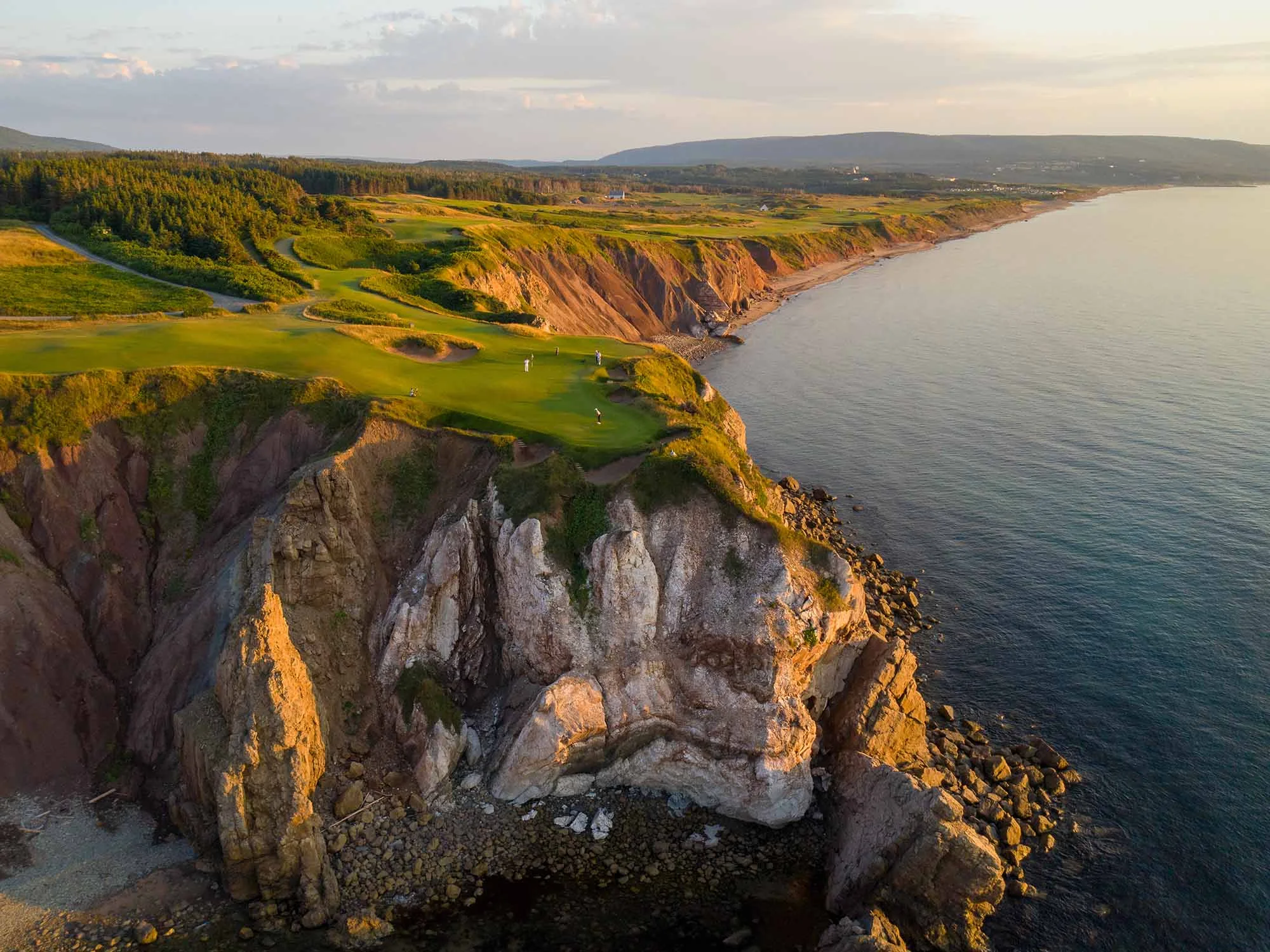
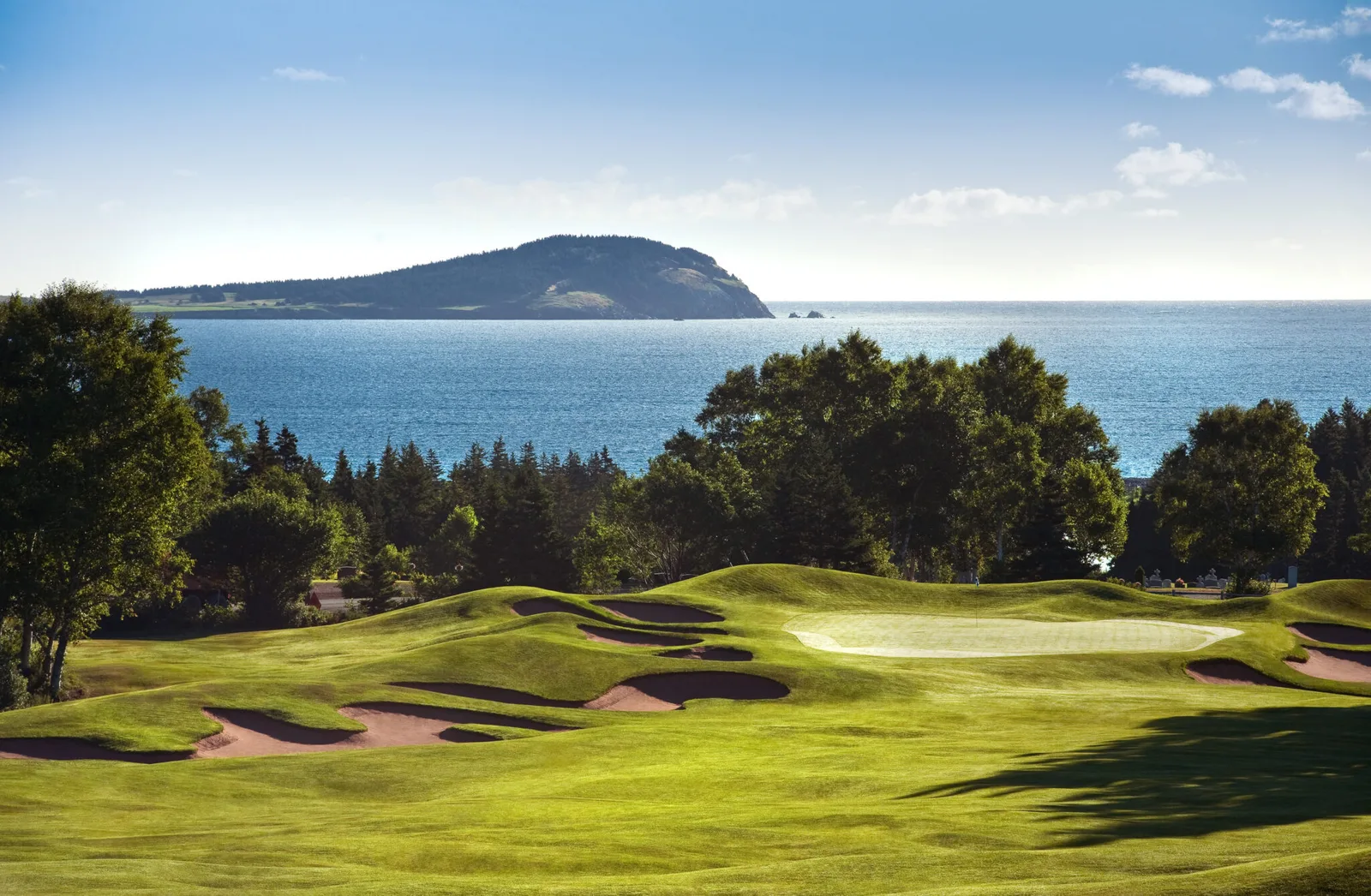
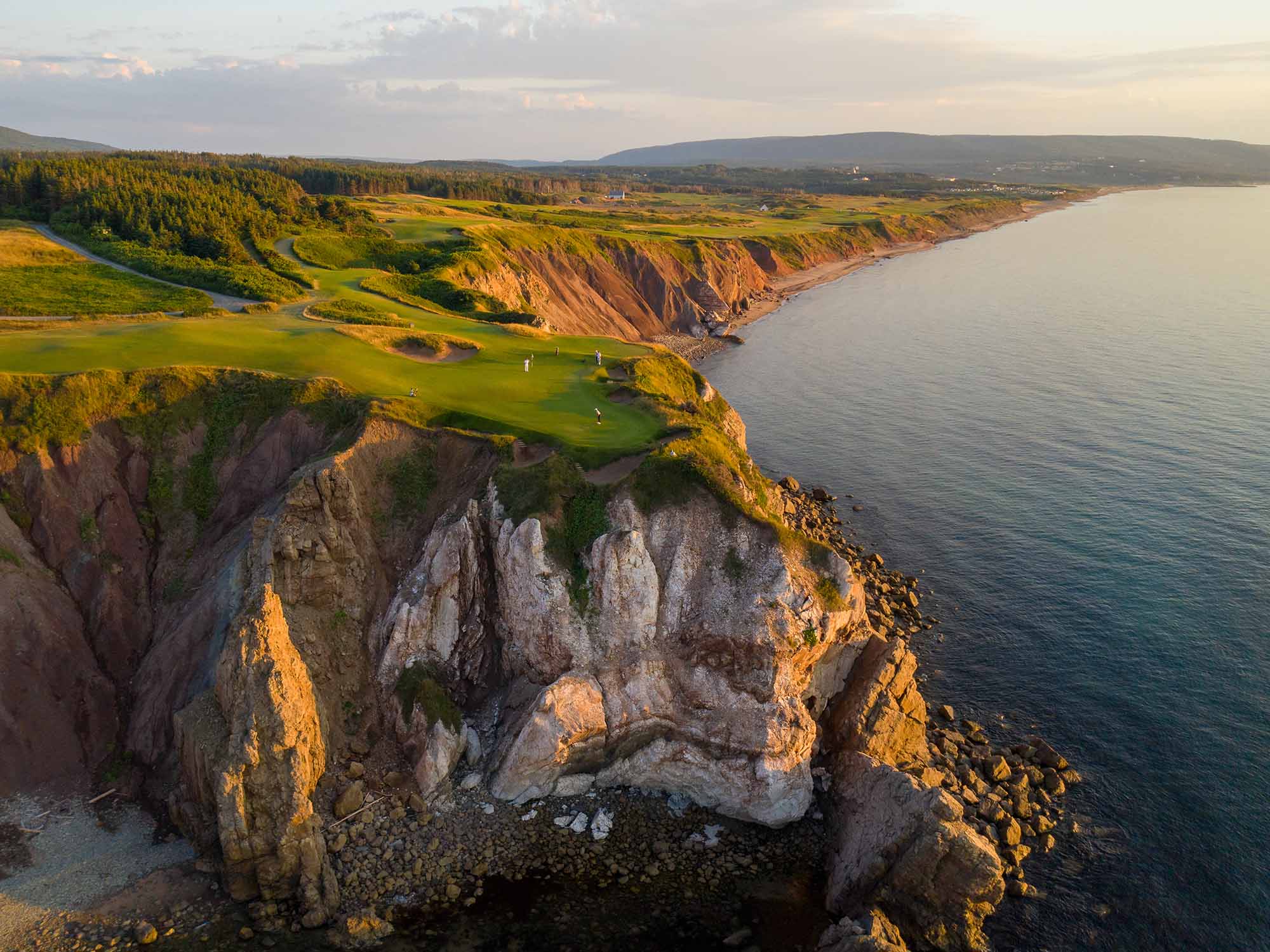
Cabot Cliffs golf course at sunset in Cape Breton, Nova Scotia — greens perched on rugged cliffs above the Atlantic Ocean
Made for the rounds you actually play.Canada-focused • independently written

Travel

Great Canadian golf without the private-club price.

Eight public courses with the scenery of a bucket-list trip and green fees around $150 or less.

Cabot Cliffs golf course beside the ocean in Cape Breton, Nova Scotia
CANADA • COURSE GUIDE

Bucket-List Beauty, Public Price Tags

From prairie dunes to Rocky Mountain valleys and Cape Breton’s ocean edge, these are the affordable public rounds worth building a trip around.

See all eight courses →
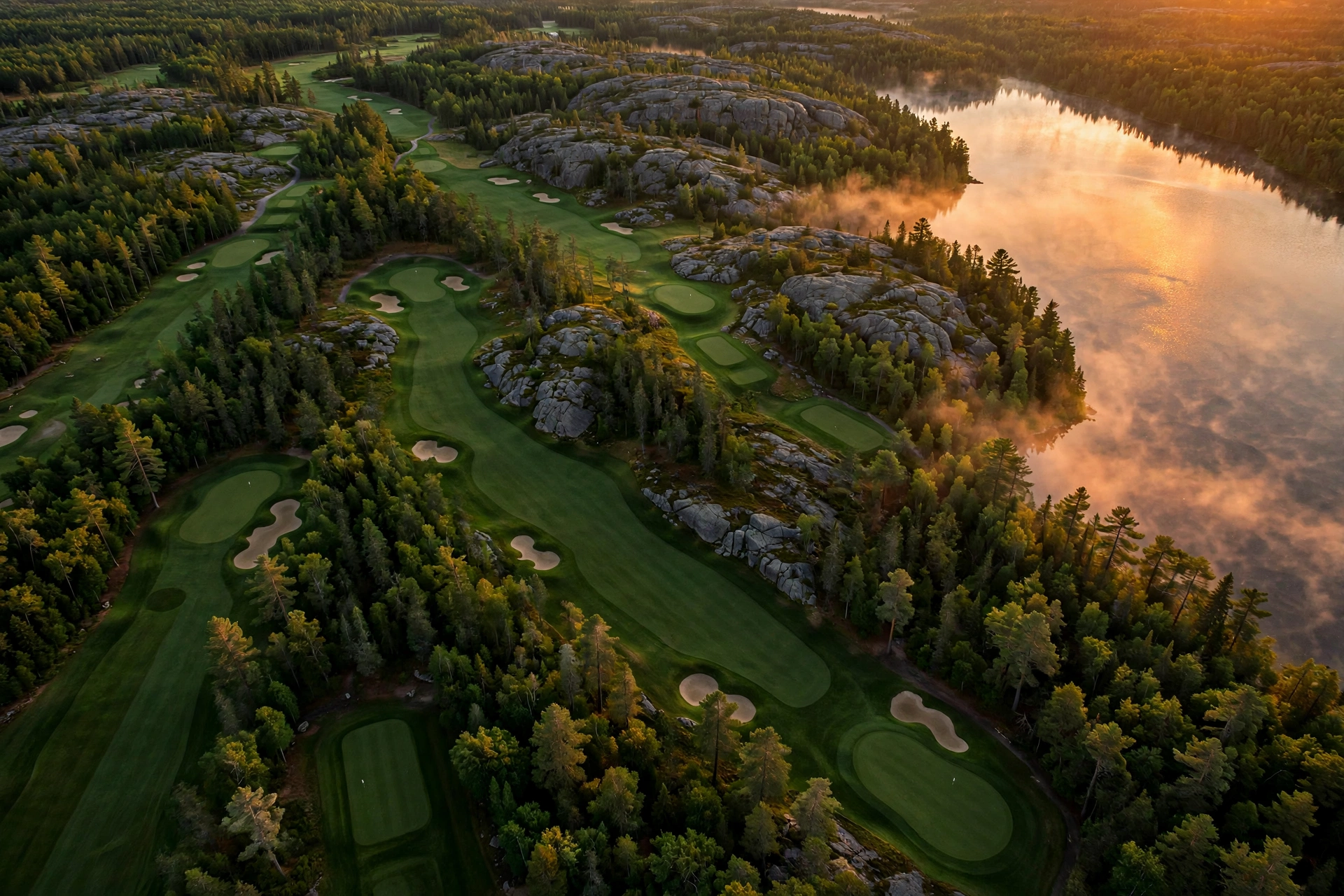
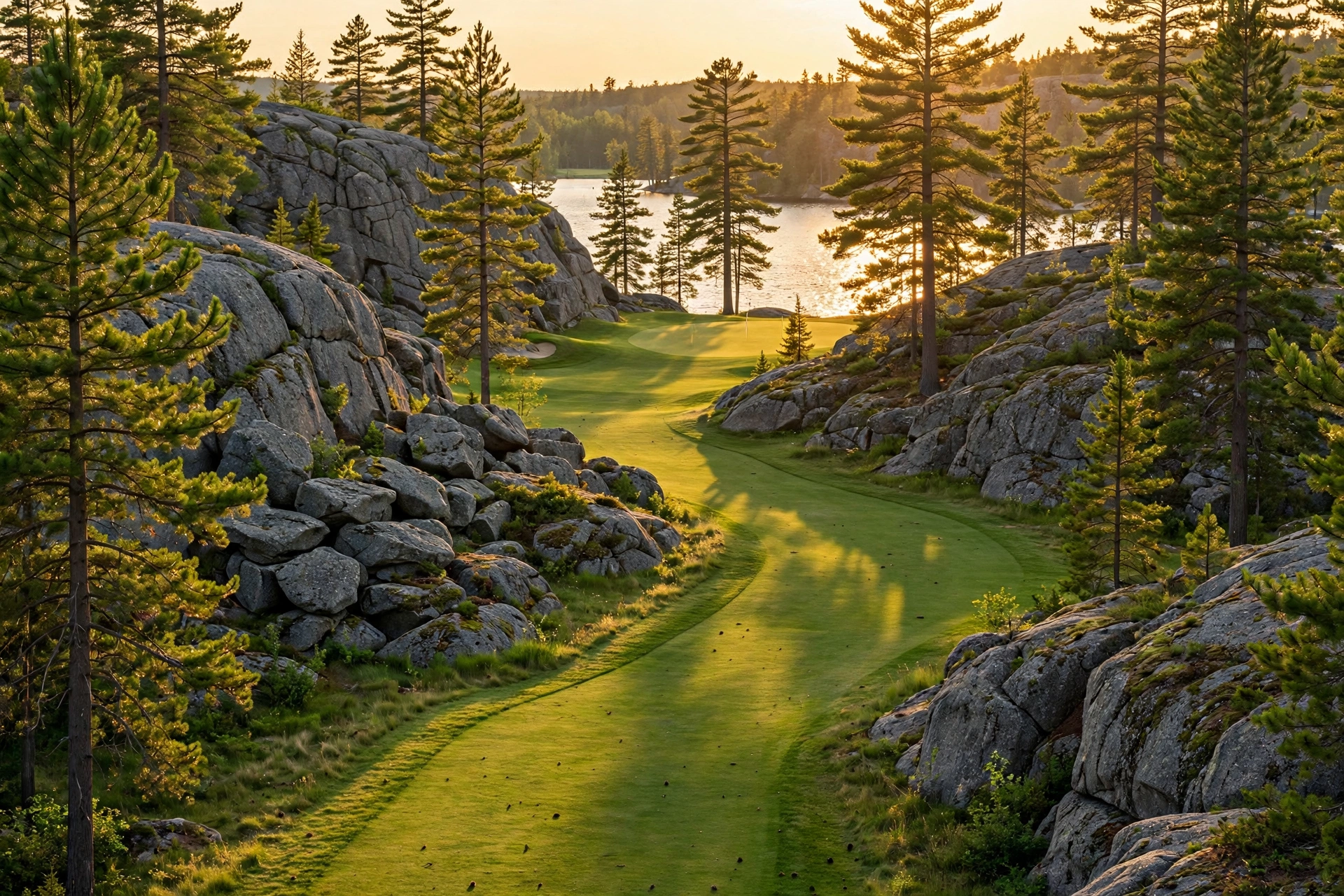
Aerial view of an Ontario golf course woven through granite outcrops and pine forest beside a lake at sunset
ONTARIO • PROVINCIAL SERIES

Top 10 Places to Play in Ontario

From a $55 Toronto municipal round to a $300 Muskoka splurge — the first stop in our province-by-province series ranks Ontario’s best public golf at every budget.

See the Ontario list →

Top 10 places to play

Provinces

Our province-by-province series ranks the best public golf in each province from cheapest to most expensive. One new province lands each month — start with Ontario.

  • OntarioRead the Top 10 →
  • British ColumbiaComing soon
  • AlbertaComing soon
  • QuebecComing soon
  • Nova ScotiaComing soon
  • Prince Edward IslandComing soon
  • New BrunswickComing soon
  • SaskatchewanComing soon
  • ManitobaComing soon
  • Newfoundland and LabradorComing soon

Why this site exists

For golfers with jobs, budgets, and the occasional slice.

Everyday Golfer helps people make confident choices without pretending everyone needs the newest release. Canadian gear guides, buying advice, game basics, honest cost breakdowns, and golf travel pieces are written for regular golfers who care more about useful advice than status.

More about the approach →
← All guides

Gear guide • Canada • 2026

Best Drivers for High Handicappers

Five forgiving current drivers, what forgiveness means, and how to avoid paying for adjustability you will never use.

Golfer hitting a driver from a tee box

A forgiving driver does not fix a swing. It reduces the punishment when contact drifts away from the centre of the face—exactly what most high-handicap golfers need. The best heads keep ball speed, launch, and direction more consistent across a larger area.

The short answerIf you want maximum stability, start with the PING G440 K. If your common miss is a slice, test the Callaway Quantum Max-D. If value matters, the Wilson DYNAPWR Max+ brings 10K-style stability at a lower flagship price.

What “forgiving” really means

Manufacturers usually talk about moment of inertia, or MOI: the clubhead’s resistance to twisting when impact is off-centre. Higher MOI generally means a heel or toe strike starts closer to the intended line. But a useful high-handicap driver also needs playable launch, enough spin to stay airborne, and a shape that looks comfortable behind the ball.

Do not buy only from a spec sheet. Loft, shaft weight, length, and face angle can move your strike pattern more than a few hundred points of MOI. A fitting—even a basic retail bay session—is worth more than guessing.

PING G440 K

Best overall for stability
01

A 460cc head with a deep centre of gravity, adjustable back weighting, and PING’s highest combined MOI in the line. It is built to keep speed and direction steady when the strike moves around.

ProsExtremely stable; high launch; draw/neutral/fade tuning.
ConsPremium price; looks large at address.
Official specs ↗

TaylorMade Qi4D Max

Best blend of speed and accuracy
02

The Max head uses movable front/rear weights, a redesigned Speed Pocket, and a 4° loft sleeve. Put the heavier weight back for the most stable setup; move it forward only if you strike the middle consistently.

ProsAdjustable; strong low-face speed; premium sound and shape.
ConsExpensive; no dedicated draw-bias Max head.
Official specs ↗

Callaway Quantum Max-D

Best for a persistent slice
03

Internal draw weighting and a high-launch profile help golfers who regularly leave the face open. Callaway’s multi-material Tri-Force Face is designed to preserve ball speed across off-centre strikes.

ProsNoticeable draw help; easy launch; forgiving face.
ConsCan over-correct a straight hitter; about $899.99 CAD at review.
Official specs ↗

Titleist GTS2

Best traditional look
04

Titleist’s GTS2 pairs a cleaner, more compact profile with a Speed Sync Face, split-mass construction, dual weights, and an adjustable SureFit hosel. It is the choice for golfers who want forgiveness without a stretched-looking crown.

ProsConfident shape; broad loft range; strong feel.
ConsNo dedicated draw-bias version; premium pricing.
Official specs ↗

Wilson DYNAPWR Max+

Best value in a max-MOI head
05

Wilson’s first 10K-MOI driver uses a lighter face, a 26-gram flippable rear weight, and a six-way hosel. It favours a high, steady flight and undercuts many flagship competitors.

Pros10K stability; high launch; useful draw/neutral weight.
ConsNot ideal if you already launch too high; fewer stock fitting options.
Official specs ↗

How to choose yours

  • Bring your current driver so every result has a baseline.
  • Prioritize strike pattern and dispersion before your single longest ball.
  • Try 10.5° before assuming lower loft means more distance.
  • Ask to test a shorter build if you struggle to find the centre.
  • Choose draw bias only when your normal miss is right—not because it sounds easier.

Method and sources

Selections favour off-centre stability, usable launch, adjustability, and independent 2026 testing—not tour usage alone.

Official model pages: PING, TaylorMade, Callaway Canada, Titleist, and Wilson. Cross-checked against Golf Monthly’s 2026 testing. Prices and availability can change.
← All guides

Gear guide • Canada • 2026

Most Forgiving Irons

Five current game-improvement iron sets that keep more mishits on the green — what forgiveness means in irons, and how to avoid buying clubs you will outgrow.

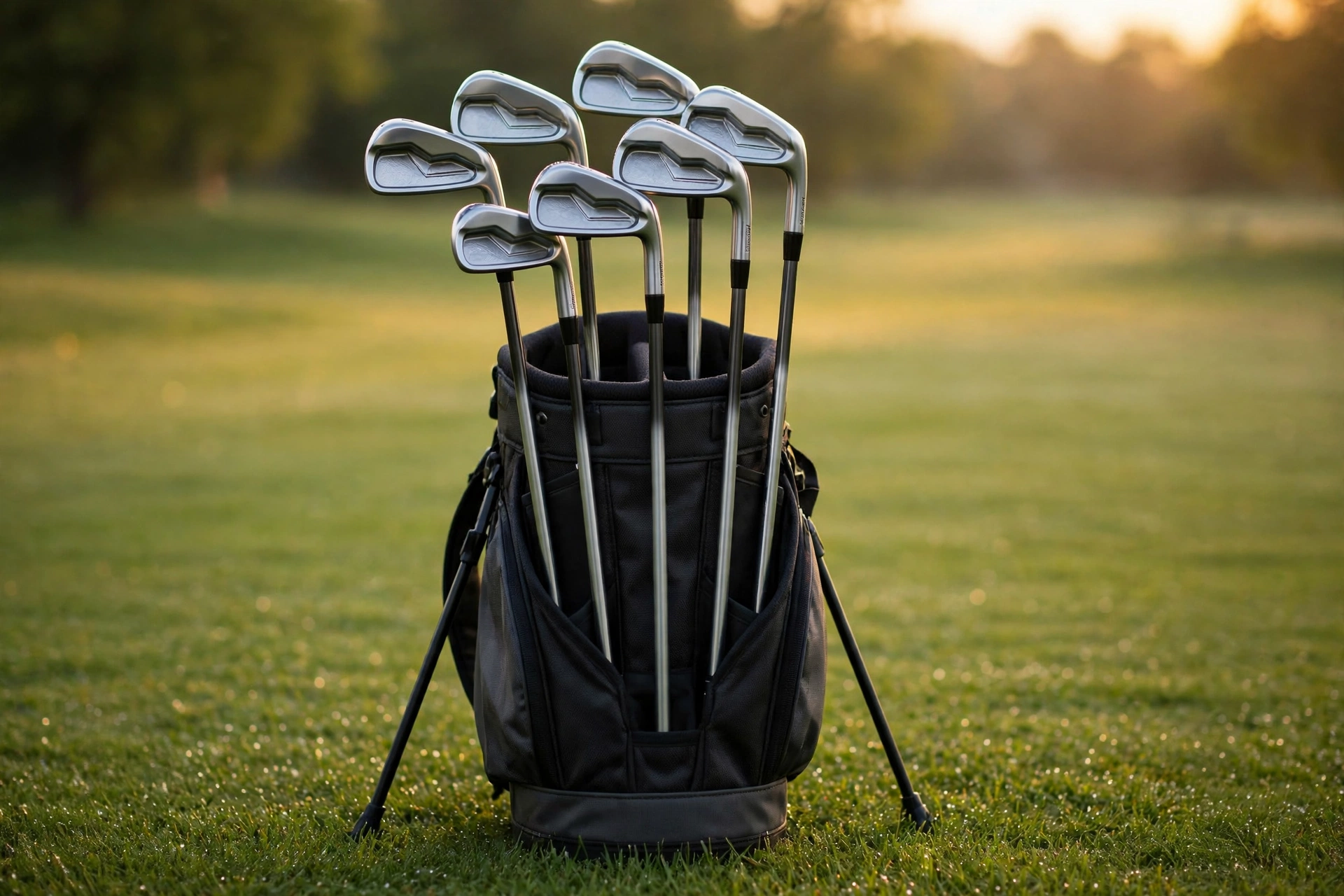
A set of forgiving game-improvement irons

A forgiving iron does not fix a fat shot. It decides how much that shot costs you. The best game-improvement irons keep ball speed up on toe and thin strikes, launch the ball high enough to hold a green, and glide through the turf instead of digging — exactly what most high-handicap golfers need.

Forgiveness in irons comes from a few places at once: a low, deep centre of gravity that helps the ball up; weight pushed to the perimeter so mishits lose less speed and stay closer to the line; wider soles that skim the turf; and faces engineered to flex on strikes low on the face, where most amateur misses actually happen.

The short answerIf your iron miss goes right, start with the TaylorMade Qi Max — its face is designed to stay square through impact. If you want maximum forgiveness without a chunky game-improvement look, try the PING G440. And if value matters most, the Wilson DYNAPWR Max brings big forgiveness for hundreds less, though we could not confirm its Canadian price.

What “forgiving” really means

With drivers, forgiveness is mostly about the head resisting twist. With irons, it is a package deal. Manufacturers push weight low and to the perimeter so off-centre strikes lose less ball speed and finish closer to the target. A little offset and wider soles help the club through the turf and square up at impact. And because most amateur iron misses happen low on the face, modern designs — Callaway’s undercut cavity, TaylorMade’s Speed Pocket — are built to protect ball speed exactly there.

One thing to watch: strong lofts. Every set here carries a 7-iron at 28 or 29 degrees — roughly what a 6-iron used to be. That is a big part of why they look long on a launch monitor, but it opens a hole at the bottom of the bag: a 42–44° pitching wedge and a 54–56° sand wedge leave about 20 yards with nothing to fill it. That is why every set below ships with a seventh club — an approach, utility, or gap wedge — and you should still budget for the wedge after it.

Do not buy only from a spec sheet. Shaft weight, lie angle, and length move your strike pattern more than small differences between heads. A fitting — even a basic retail bay session — is worth more than guessing. And if your current irons are from 2023 or 2024, the published changes are modest: a lie-angle check and a shaft fitting on what you already own may help more than a new set.

PING G440

Most forgiveness in a compact shape
01

PING’s current game-improvement iron (early 2025) hides its help well. The face is thinner and shallower than earlier G irons, the topline and blade length are shorter, and weight sits in the toe and hosel for stability. The 4-, 5- and 6-irons run a touch longer to spread the gaps at the top of the set, and a High Launch build with lighter components suits slower swings. About C$1,569.97 for a 5–PW plus utility wedge steel set (seven clubs), marked down from C$1,669.99.

ProsCompact, confidence-inspiring shape; strong off-centre ball speed; HL build for slower swings.
ConsSome golfers report a lower flight than expected; premium pricing.
Official specs ↗

TaylorMade Qi Max

Best for slicers
02

TaylorMade’s 2026 game-improvement iron replaces the 2024 Qi. The headline is the face: engineered to flex evenly so it is less likely to open at impact — the miss that sends irons right. A Speed Pocket in the long irons protects ball speed on thin strikes, and an internal sound bar with ECHO damping makes it quieter and more solid than its predecessor. About C$1,499.99 for a 5–PW plus approach wedge steel set (seven clubs); graphite is C$1,649.99, and the higher-launching HL version is also C$1,499.99 in steel.

ProsAnti-slice face design; easy launch; noticeably better sound and feel than the old Qi.
ConsA modest update if you already own the 2024 Qi; offset does some of the anti-slice work.
Official specs ↗

Callaway Quantum Max

Best for thin strikes
03

Callaway’s 2026 replacement for the Elyte rebuilds the head from scratch: the face and hosel are cast as one piece and welded to the body, with the weld line moved back from the face and running all the way around. Callaway calls it a 360° undercut cavity, and the point is flex — the face and sole give more on strikes low on the face, where most amateur misses happen. An AI-designed face and urethane microspheres inside the hollow head round it out. About C$1,499.99 for a 5–PW plus approach wedge steel set (seven clubs); the bigger Max OS version is the same price.

ProsExcellent low-face forgiveness; easy launch; Max OS option for maximum help.
ConsFirm, loud strike next to forged irons; some see little change from the Elyte.
Official specs ↗

Titleist T350

Best feel in a forgiving iron
04

Titleist’s current game-improvement iron (summer 2025) pairs a forged L-face of variable thickness with a hollow body, a Max Impact polymer layer behind the face, and tungsten in the perimeter. It launches high despite strong lofts, and golfers keep calling it the best-feeling game-improvement iron they have hit. About C$2,199.99 for a 5–PW plus gap wedge steel set (seven clubs) — roughly C$700 more than the TaylorMade or Callaway before tax.

ProsOutstanding feel and sound; high launch; clean look at address.
ConsThe price — by far the most expensive here; toe strikes can drift.
Official specs ↗

Wilson DYNAPWR Max

Best value
05

Wilson calls the DYNAPWR Max its longest and most forgiving iron yet: a larger head and sole raise MOI, an AI-designed cup face keeps ball speed across the face, and toe-biased weighting with a low centre of gravity helps the ball up and stop. Independent reviews rate it ideal for higher handicaps who want maximum help. We could not verify a Canadian price — Wilson lists the graphite set at US$899.99 on its US store (marked down from US$999.99), hundreds less than the other four even before any exchange math.

ProsMaximum forgiveness per dollar; high, easy launch; confidence-inspiring size.
ConsNo confirmed Canadian price or retailer; fewer stock fitting options.
Official specs ↗

How to choose yours

  • Hit every candidate with the same shaft — the shaft changes the result more than the head does.
  • Judge by your worst shots, not your best: look at dispersion and where the misses finish, not the longest carry.
  • Check the wedge gap: with strong lofts everywhere, price in the wedge below the set’s approach or utility wedge.
  • Try the high-launch (HL) builds if your swing speed is modest — lighter components and weaker lofts help more than extra tech.
  • Choose the anti-slice design only when your normal iron miss goes right — not because it sounds easier.

Method and sources

Selections favour off-centre stability, usable launch, and independent 2026 testing — not tour usage. Specifications come from the manufacturers’ published material. Canadian prices are a dated snapshot: read on Golf Town’s Canadian website in October 2026 and reported by Panxis Golf’s Canada desk, before tax — TaylorMade Qi Max and Callaway Quantum Max C$1,499.99, PING G440 C$1,569.97 on markdown, Titleist T350 C$2,199.99. We could not confirm a Canadian price for the Wilson DYNAPWR Max. Prices and availability can change.

Official model pages: PING, TaylorMade, Callaway Canada, Titleist, and Wilson. Prices and availability can change.
← All guides

Value guide • Canada

Best Budget Golf Balls That Don’t Sacrifice Performance

Five dependable balls at roughly $35 CAD per dozen or less—and the golfer each one fits best.

White golf balls arranged together on a practice green

You do not need a tour ball for casual rounds, especially if two or three disappear before the turn. A good value ball should match your speed, launch easily, feel predictable off the putter, and cost little enough that you keep using the same model.

Our budget lineAbout $35 CAD per dozen, before tax. The Costco option is sold in a 24-pack and works out lower per dozen. Prices shown are a dated snapshot, not live quotes.

Srixon Soft Feel

$34.99 CAD at Golf Town
Best all-round

Soft off every club, easy to launch, and a strong fit for moderate swing speeds. Its two-piece ionomer construction keeps distance and durability high, though it will not check like urethane.

Best forModerate speeds and golfers who want one dependable ball.
Trade-offLess short-game spin than a tour ball.
Retail source ↗

Callaway Supersoft

$34.99 CAD at Golf Town
Easiest launch

An ultra-soft, low-compression option that helps slower swingers launch the ball without feeling firm. It is also a friendly first “regular ball” for newer golfers.

Best forBeginners, slower swing speeds, and soft-feel fans.
Trade-offFast swingers may find it too soft and low-spin.
Retail source ↗

Wilson Duo Soft

$29.99 CAD at Golf Town
Softest feel

Built for a soft, straight flight with low driver spin. It is a smart choice if harsh impact feel bothers you or if keeping tee shots stable matters more than grabbing wedges.

Best forSoft feel, straight flight, and easy launch.
Trade-offLimited wedge spin from a two-piece cover.
Retail source ↗

Titleist TruFeel

$34.98 CAD at Coastal Golf Canada
Best familiar feel

Titleist’s value ball emphasizes soft feel, reliable flight, and predictable putting. It suits players who want a familiar brand and consistent response without Pro V1 pricing.

Best forFeel-first golfers and brand consistency.
Trade-offNot the greenside spin of urethane.
Retail source ↗

Kirkland Signature Performance+ v3.0

24-pack; cited Canadian warehouse pricing ≈ $20/dozen
Best bulk value

A urethane-covered value ball that produces more greenside bite than most budget two-piece models. It is hard to beat per ball if you already have a Costco membership.

Best forValue hunters who still want wedge spin.
Trade-offCan spin too much off the driver; 24-ball commitment.
Official product page ↗

How to pick one

Choose by the shot you care about most. Need height and soft feel? Start with Supersoft or Duo Soft. Want more greenside reaction? Try Kirkland. Want a balanced, durable default? Soft Feel is the simplest answer. Then play the same ball for five rounds—the consistency is more valuable than switching sleeves every week.

Prices and product details were checked from Golf Town, Coastal Golf Canada, and Costco Canada on 13 Oct 2026. Promotions, membership requirements, taxes, and stock vary.
← All guides

Buy smarter

Buying Used Golf Clubs: How Not to Get Burned

Where to shop, what to inspect, and what used clubs were actually listing for in Canada in October 2026.

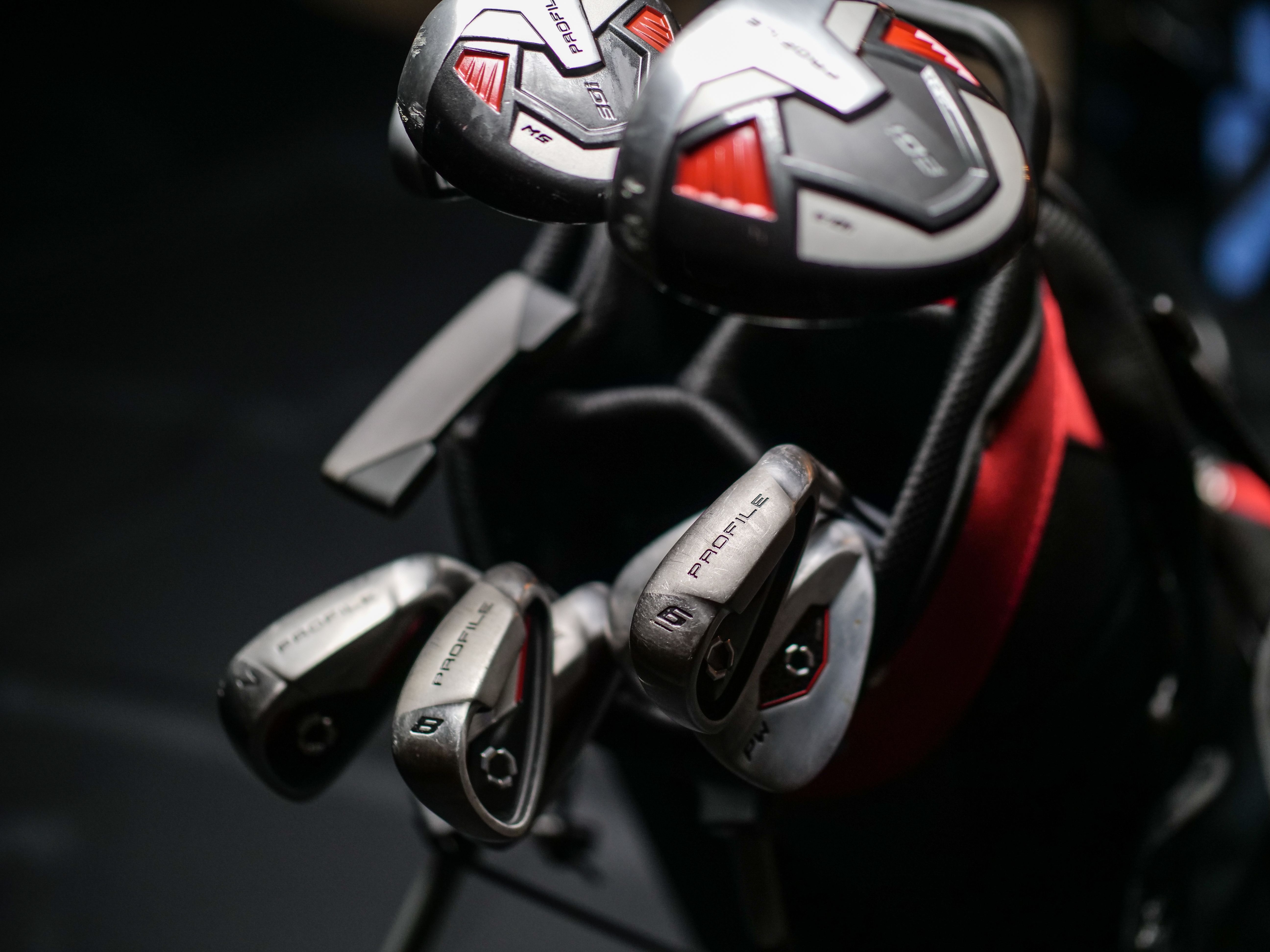
A set of golf clubs resting in a golf bag

Used clubs are often the best deal in golf. A two- or three-year-old head can perform almost identically to a current release. The risk is not age—it is hidden damage, a bad fit, or a seller who cannot explain what you are buying.

Where to buy in Canada

Start with sellers that publish condition grades and return terms: GlobalGolf.ca, Golf Town Certified Pre-Owned, Golf Avenue, and established local pro shops. Play It Again Sports can be useful because you can inspect in person. Marketplace and Kijiji can be cheapest, but buyer protection and authenticity checks are limited.

Rule of thumbA recent used name-brand club often sells 30–60% below new retail. The biggest bargain usually arrives one model cycle after launch—not ten years later.

Inspect these four things

  • Face wear: normal brush marks are fine. Avoid deep dents, cracks, caved faces, or a worn-through coating concentrated in one spot.
  • Shaft: sight down its length for bends. Check graphite for splinters, bubbling, or cracks near the hosel and grip.
  • Grip: shiny, hard, or cracked rubber means an immediate regrip. Price that into the deal.
  • Hosel and ferrule: gaps, twisting, loose heads, or dried epoxy can signal a poor repair.

Canadian used price guide

These are broad listing ranges observed at GlobalGolf.ca on 13 Oct 2026. Model year and condition grade cause wide swings.

Drivers$215–$880

Older value heads to current-year premium models.

Fairway woods$70–$510

Very playable older models start low.

Hybrids$130–$490

Check shaft weight and loft gaps.

Iron sets$190–$2,300

Set makeup and shaft type matter.

Wedges$60–$260

Groove wear matters more than cosmetics.

Putters$130–$640

Condition and collectability drive price.

Before you pay

  1. Confirm the exact model, loft, shaft, flex, length, and handedness.
  2. Ask for clear photos of the face, crown/topline, sole, shaft label, grip, and serial area.
  3. Compare the price with at least two graded-retailer listings.
  4. For in-person deals, bring a golf ball and gently roll it across the face to spot dents; never hit a ball unless the seller and location allow it.
  5. Walk away if the seller rushes you, the specs change, or the price is impossibly low.
Price ranges and inventory: GlobalGolf.ca used club hub. Other established options: Golf Town Certified Pre-Owned. Trade-in terms: Golf Town trade-ins. Prices change with inventory and condition.
← All guides

The game • Canada

Golf Handicap Explained

What a Handicap Index measures, how to get an official one through Golf Canada, and why it makes more rounds meaningful.

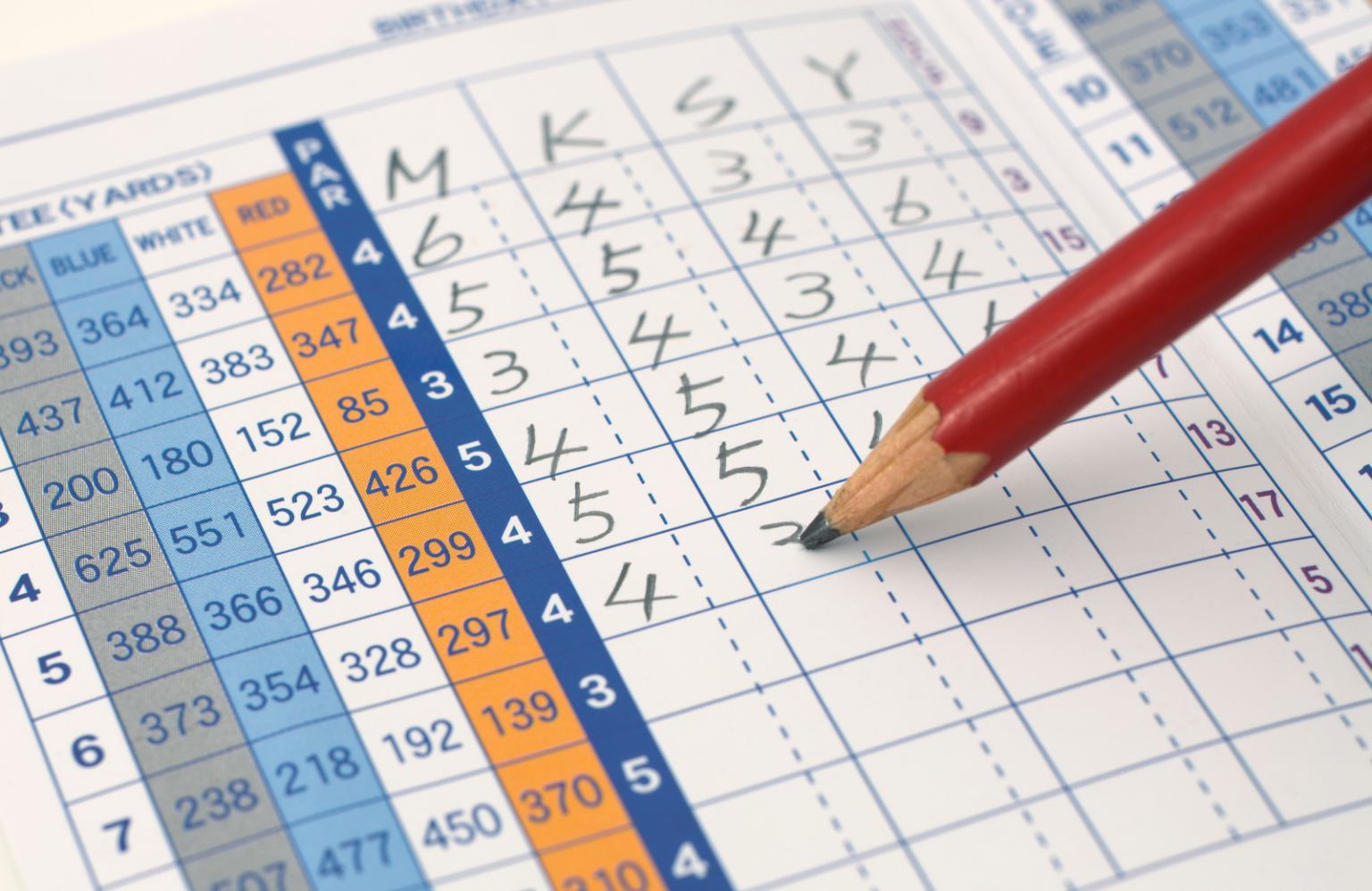
A golf scorecard with handwritten scores

A handicap is not your average score. Your Handicap Index estimates your demonstrated playing ability based on your better recent rounds, then adjusts to the difficulty of the tees you play. That lets golfers of different abilities compete on a more level basis.

Handicap Index vs. Course Handicap

Your Handicap Index is portable. Your Course Handicap is the number of strokes you receive for a specific course and tee set. The second number changes because a 6,000-yard municipal course and a 7,100-yard championship course are not the same test.

How the World Handicap System worksOnce you have enough scores, your Index is based on the lowest 8 Score Differentials from your most recent 20. Golf Canada updates it when new rounds are posted.

How to get an official Golf Canada handicap

  1. Join Golf Canada directly or through a member club or provincial golf association.
  2. Play and post scores totalling 54 holes on rated courses—three 18-hole rounds, six 9-hole rounds, or a combination.
  3. Enter scores in the Golf Canada app or online Score Centre. Hole-by-hole entry helps apply the correct maximum-score adjustment.
  4. Post by midnight on the day you play so the Index and playing conditions calculations stay accurate.

Golf Canada listed an individual membership at $64.95 for 12 months at the time of review. Club memberships may include handicap access, so check before buying twice.

Why it matters

  • Fair matches: friends at different levels can play for a meaningful result.
  • Progress: the Index shows long-term improvement more honestly than one lucky score.
  • Events: many club, charity, provincial, and national competitions require an official index.
  • Better goals: knowing where strokes are received helps course strategy.

What not to do

Do not post only your good rounds, skip short putts outside the format’s rules, or choose the wrong tee. A handicap is useful only when it reflects the golf you actually play.

← All guides

Fun stuff • The game

The Weirdest Rules in Golf — and the Famous Blowups Behind Them

Bunkers that weren't bunkers, an inch that cost a major, and the rule that let you block your opponent's putt.

A golf ball sitting in footprint-trampled sand with a wedge hovering above it

Golf has a rulebook that runs to hundreds of pages, and for most of its history it was written by people who seemed to enjoy making the game harder than it already is. The good news for the rest of us: the strangest rules have produced some of the most unforgettable moments in the sport — and every one of them has a lesson your Saturday foursome can actually use.

1. The bunker that wasn't a bunker

The 2010 PGA Championship at Whistling Straits came down to the 72nd hole. Dustin Johnson had just birdied the 16th and 17th to take a one-shot lead. Then his drive on the last sailed right, into a patch of sand trampled flat by spectators.

Johnson didn't think twice. He grounded his club in the sand — twice — played his shot, made bogey, and walked to the scoring area believing he was headed for a playoff.

He wasn't. Whistling Straits has roughly 1,000 bunkers, and before the week started every player had been told in a memo that all sandy areas on the course counted as bunkers — including the ones outside the ropes where fans were standing. Grounding a club in a bunker cost two strokes. Johnson dropped to a tie for fifth. Martin Kaymer beat Bubba Watson in the playoff instead.

The lesson for your round: if there's sand under your ball, treat it like a bunker until someone proves otherwise. “It didn't look like a bunker” has never once worked as a defence.

2. The inch that cost a major

Lexi Thompson was cruising at the 2017 ANA Inspiration, one of the LPGA's majors. On Saturday, on the 17th hole, she marked a putt of about a foot, picked her ball up, and put it back down — about an inch from where it had been.

Nobody noticed. She signed her card and went home. Then, on Sunday, a television viewer emailed the LPGA about it.

Officials reviewed the video and agreed: two strokes for playing from the wrong place, plus two more for signing an incorrect scorecard. Four strokes, for an inch. Thompson was told between the 12th and 13th holes of the final round, while leading by two. “Is this a joke?” she asked the rules official. It was not. She went from two ahead to two behind in the time it took to walk to the next tee.

To her enormous credit, Thompson fought back and forced a playoff — and lost it to So Yeon Ryu on the first extra hole.

The fallout was almost as famous as the incident. Within a couple of years the rules were changed so that armchair referees at home can no longer call in penalties. But the underlying lesson survives: replace your ball exactly where it was. An inch is not “close enough” when a major is on the line — and your foursome's money game isn't that different.

3. Two yards too far back

Tiger Woods, 2013 Masters, 15th hole, second round. His wedge shot was so good it hit the flagstick and bounced back off the green into the water. The rules gave him options for the drop, including going back to where he'd played the shot from. He went back — and then, by his own later admission, about two yards farther back than that, because he liked the lie better.

“I went two yards farther back and I tried to take two yards off the shot of what I felt I hit,” he said on television that evening. A viewer had already flagged the drop to officials. The committee first cleared him, then reversed itself after hearing his own words: two strokes for dropping and playing from the wrong place.

It could have been worse. He'd also signed a scorecard that was lower than his real score, which normally means disqualification. The committee used its discretion to waive the DQ — and Tiger finished tied for fourth while Adam Scott won the green jacket.

The lesson: when you take relief, drop where the rule says, not where the grass looks nicer. And maybe don't explain the details on camera.

4. The rule that let you block your opponent's putt

This one sounds made up, but it was real for more than a century. In match play, if your opponent's ball sat on the green directly between your ball and the hole, it stayed there. You had to chip over it or putt around it. That was called a stymie.

It gets better. If your ball hit your opponent's ball and knocked it into the hole, your opponent was considered to have holed out. You could literally help your opponent win by trying to get around them.

The USGA softened the rule in 1938, letting the blocking ball be lifted if it was within six inches of the hole. But the stymie wasn't fully killed off until January 1, 1952, when the USGA and the R&A issued their first unified rulebook. Today, the blocking ball just gets marked and lifted, and everyone putts in peace.

The lesson: if your regular match-play rival complains that the rules used to be tougher, they're right — and you should be grateful.

5. Fourteen clubs, and the one that cost a major

Before 1938 there was no limit on how many clubs you could carry, and some players took full advantage. Lawson Little, who won the U.S. and British Amateurs back to back in 1934–35, sometimes carried as many as 26 clubs. Others carried more than 30. Caddies hauled bags that weighed a ton, and the governing bodies finally decided that skill should matter more than inventory. The USGA set the limit at 14 clubs on January 1, 1938; the R&A followed in 1939. Fourteen was roughly what a standard set already was — driver, a couple of fairway woods, irons, wedges, putter — so it felt like a compromise rather than a punishment.

Sixty-three years later, the rule produced one of the cruellest moments in Open history. Ian Woosnam birdied the par-3 first hole on Sunday at the 2001 Open at Royal Lytham & St Annes to take the lead. On the second tee, his caddie, Myles Byrne, walked up and said, “You're going to go ballistic — we've got two drivers in the bag.” Fifteen clubs. Two-stroke penalty. Woosnam threw the extra driver into the bushes, watched his birdie turn into a bogey, and eventually finished tied for third, four shots behind David Duval.

The lesson: count your clubs before you tee off. It takes ten seconds and it's your caddie's job, but it's your penalty.

6. The great cleanup of 2019

After decades of incidents like the ones above, the USGA and the R&A rewrote the rules, effective January 1, 2019, and a lot of the silliness went away:

  • You can leave the flagstick in while you putt. No penalty if your ball hits it.
  • Drops are from knee height now, not shoulder height — which, among other things, makes it much harder to accidentally drop a ball two yards from where it belongs.
  • You get three minutes to search for a lost ball, not five. (Be honest: if you haven't found it in three, you weren't going to.)
  • Accidentally moving your ball on the green? No penalty — just put it back.
  • A double hit counts as one stroke. No penalty.
  • Your ball is embedded in the rough? Free relief, anywhere in the general area except sand.
  • Ball unplayable in a bunker? You can now drop outside it for two penalty strokes instead of hacking away at it.
  • And your caddie can't stand behind you while you line up a shot anymore.

Most of these changes share one idea: the rules should punish cheating and carelessness, not bad luck and honest mistakes. It's a better game for it.

What to actually remember on your next round

You don't need to memorize the rulebook. You need about five habits:

  1. Count your clubs before the first tee. Fourteen max.
  2. Treat any sand like a bunker unless you're sure it isn't.
  3. When you mark and replace your ball, put it back exactly where it was.
  4. Take relief where the rule says — not two yards toward the nicer lie.
  5. Ball in a divot in the fairway? There's still no free relief. Play it as it lies, curse quietly, and move on.

Golf's rules are weird because golf is weird — a game where you call penalties on yourself, where an inch matters, and where a rule written in 1938 can still ruin someone's Sunday in 2001. That's also what makes it great. Just try not to become the next story in this article.

← All guides

Money • Canada

How Much Does Golf Actually Cost in Canada?

An honest 2026 breakdown of green fees, equipment, lessons, and memberships—with a low-cost path that still feels like real golf.

A Canadian golf course with rolling fairways and evergreen trees

Golf can cost almost anything. The useful question is not “Is golf expensive?” but “Which version of golf do I want?” Walking twilight rounds with used clubs is a different budget from premium weekend tee times and a private membership.

Representative, not universalAll figures are CAD and were checked in October 2026. Region, season, day, tee time, taxes, and included extras all change the total.

Green fees

MunicipalAbout $48–$82 / 18 holes

Kitchener examples ran from $48.25 weekday to $55.50 weekend; Toronto’s Don Valley was $73.09 weekday and $81.90 weekend before HST.

Daily-feeAbout $70–$80

Mystic Golf Club listed $70 weekdays and $78.50 weekends, with cart extra.

Premium publicAbout $210–$225

Wooden Sticks included a cart and meal, so compare inclusions, not just the headline price.

TwilightOften the best value

Examples dropped to about $32–$55 when starting later.

Equipment

A complete new starter package generally landed around $550–$850 at Golf Town during the review, while premium name-brand full sets reached $1,700–$2,000. Add a bag ($100–$400), shoes (under $100 budget to $250 mainstream), gloves, tees, and balls ($20–$85 per dozen).

The smarter beginner move is often a complete package or a used partial set: driver, fairway wood or hybrid, 6-iron through pitching wedge, sand wedge, and putter. You do not need fourteen clubs on day one.

Lessons

Representative Canadian rates ranged from about $60–$80 for a 30–45 minute course-pro lesson to roughly $160–$250 per hour at GTA academies. One good lesson early can save more money than repeatedly replacing clubs to solve a swing problem.

Memberships

Municipal passAbout $1,500

Golf Dorval’s five-day 2026 Select Club pass was a published example.

Mid-tier clubAbout $2,160–$3,750

Candle Lake and Mill Run provide representative published ranges.

Premium private$7,091+ dues

Camelot also listed food-and-beverage and capital fees.

Break-even checkDivide dues by likely rounds

Then add initiation, capital, food, cart, and guest requirements.

Three sample seasons

Lean newcomer≈ $1,000–$1,700 first year

Used set, 10 twilight rounds, budget balls, shoes, and one lesson. This is an illustrative plan built from the ranges above.

Regular public golfer≈ $2,300–$4,000

20–30 mixed tee times, current used gear, several lessons, balls, and practice.

Member≈ $3,500–$10,000+

Dues plus fees, equipment, events, travel, and food minimums.

Best savingsWalk + twilight + used

The three levers that cut cost without cutting the game itself.

← All guides

The game • Canada • 2026

How to Break 100: A Realistic Plan for Weekend Golfers

You don't need a new swing, a new driver, or a single birdie. You need a plan that turns blow-up holes into bogeys.

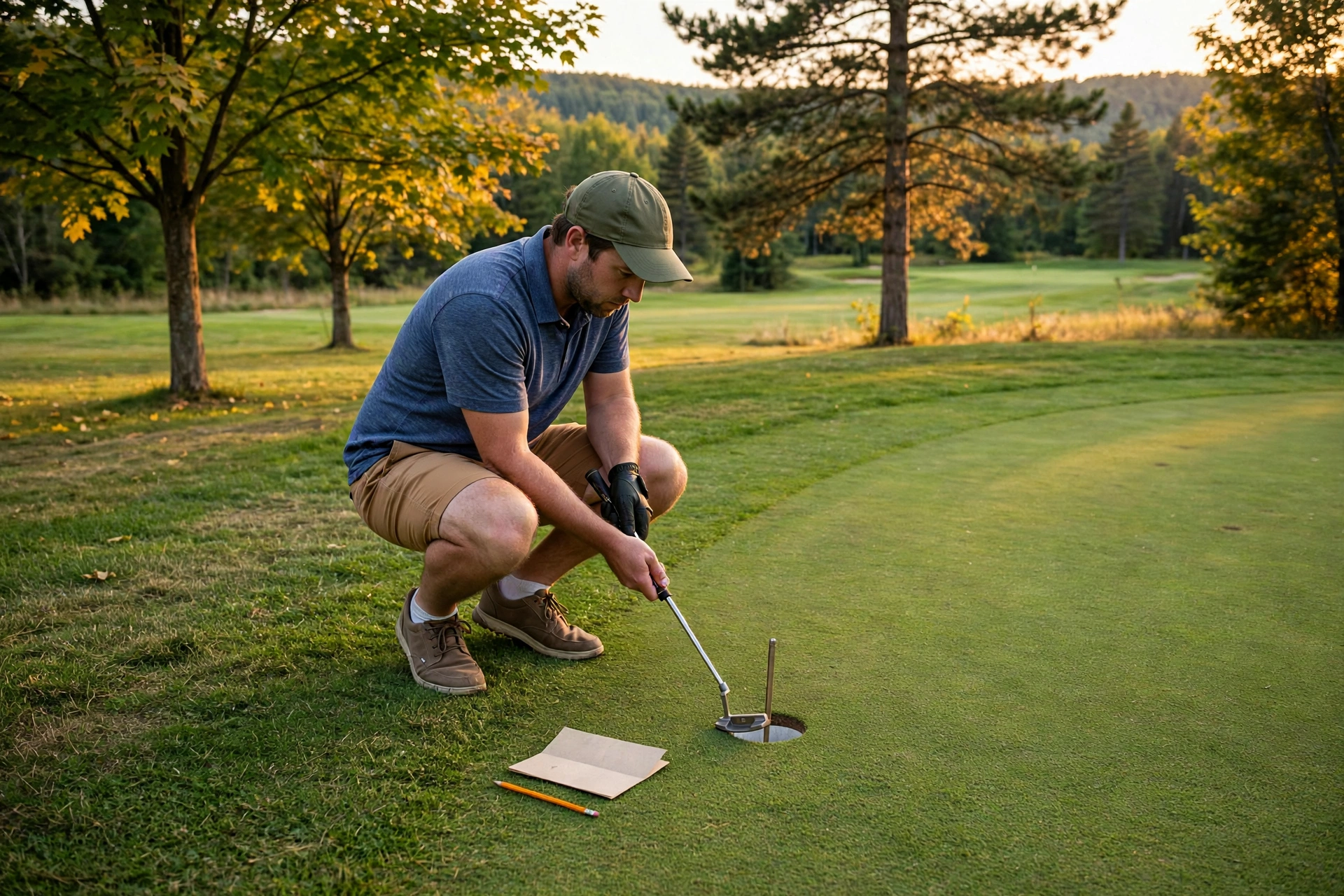
A weekend golfer crouching by the hole with a scorecard and pencil on a Canadian public course green

Breaking 100 is the first big scoring milestone in golf, and it is more achievable than it feels. Only about half of recreational golfers break 100 regularly, according to the National Golf Foundation — but that is not because the other half lack talent. It is because they keep trying to play par golf with a bogey golfer's game. Here is the math that changes everything: bogey on every hole of a par-72 course adds up to 90. That means you can bogey all 18 holes and still break 100 with nine strokes to spare. You do not need a birdie. You do not need a par. You need to stop making triples. This guide is a realistic plan for weekend golfers: the tee strategy, the one practice shot that saves the most strokes, and a simple rule for every hole.

1. Play bogey golf on purpose

Most golfers shooting 105+ are not losing strokes because they cannot hit the ball. They are losing them because they chase par on holes where bogey was always the smart result, then compound one bad shot into three. Make bogey your target score on every hole:

  • Par 3s — hit the green in one, two-putt for bogey. A three-putt still leaves you at double, which is acceptable.
  • Par 4s — get on or near the green in three shots, chip on, two-putt. That is bogey.
  • Par 5s — treat them as three-shot holes. Three safe advances, a chip, two putts: bogey or better.

If you bogey everything, you shoot 90. If you bogey most holes and slip in a few doubles, you shoot 95. That is the whole game.

2. Play the right tees

This might be the single biggest change you can make. Playing from tees that are too far back turns every hole into a longer, harder version of itself and brings hazards into play that your game cannot handle yet. A good guideline for a golfer trying to break 100 is tees that put the course at roughly 5,400 to 5,800 yards. If your drives average 180 yards, playing from 6,500-yard tees means many par 4s are effectively par 5s for you. There is no shame in the forward tees — there is only a scorecard that finally makes sense.

3. Keep the ball in play off the tee

Penalty strokes are the fastest route to 110. If your driver is unreliable, leave it in the bag. A 180-yard shot in the fairway beats a 250-yard shot in the trees every single time. Pick the club you hit most consistently — for many golfers that is a hybrid, a 5-wood, or a 3-wood — and make it your default tee club on tight or trouble-filled holes. Accuracy is the whole job off the tee when you are breaking 100; distance is a bonus. If you do find trouble, take your medicine. Punch out sideways, get back in play, and move on. The hole you save by punching out is worth more than the hole you lose trying a hero shot through the trees.

4. Learn the 30–50 yard shot

GOLF Top 100 Teacher Sarah Stone calls the 30–50 yard shot the most valuable one a high handicapper can learn, and she is right: it shows up constantly. It is the recovery punch-out, the third shot after two topped balls, the distance you never think to practice. Learn one simple version of it with a single wedge — a low, running chip that lands on the front of the green and rolls out. Practice it from 30, 40, and 50 yards until you can reliably get the ball on the green and within two-putt range. That one shot turns doubles into bogeys all round long.

5. Fix the short game first

Your full swing is not the problem. Roughly half your strokes happen within 50 yards of the hole, and that is where the strokes are leaking.

Putting: the goal is no three-putts. Lag putts are about speed, not line — practice 20- and 30-footers until you can leave them within a putter's length of the hole. And practice the short ones: three to six feet, over and over, until they feel automatic.

Chipping: keep it simple. Use a bump-and-run with a less-lofted club whenever you can instead of a high flop shot. Get the ball on the green early and let it roll. One wedge, one motion, no heroics.

A simple 60-minute practice split, if you want one30 minutes putting (mostly 3–20 feet), 15 minutes chipping and pitching with one wedge, 10 minutes on full-swing contact, 5 minutes on your pre-shot routine.

6. Have a go-to club

Identify the club you hit most solidly and make it your default for any uncertain situation — a bad lie, a recovery shot, a moment of doubt. For many golfers it is a 7-iron or a hybrid. A 140-yard shot down the middle beats a 180-yard shot that could go anywhere.

7. Keep honest score — and track the big numbers

You cannot fix what you do not measure. Keep your score honestly, including penalty strokes, and after the round circle every hole where you made triple bogey or worse. Those are the holes that decide whether you break 100. Usually there are three or four of them, and usually each one started with a single bad decision — a driver on a tight hole, a hero shot, a chunked chip. Fix the decisions and the score follows.

Your first week

  • Play your next round from the forward tees.
  • Leave the driver in the bag on any hole with real trouble.
  • Spend one range session on the 30–50 yard shot and nothing else.
  • Aim for bogey on every hole and take your medicine when trouble finds you.

Break 100 is not about playing great golf. It is about refusing to play terrible golf for one hole at a time.

← All guides

Costs • Canada • 2026

Golf Lessons in Canada: What They Cost and Whether They're Worth It

Private lessons, group clinics, and playing lessons — real 2026 Canadian prices, what actually improves your game, and when to save your money.

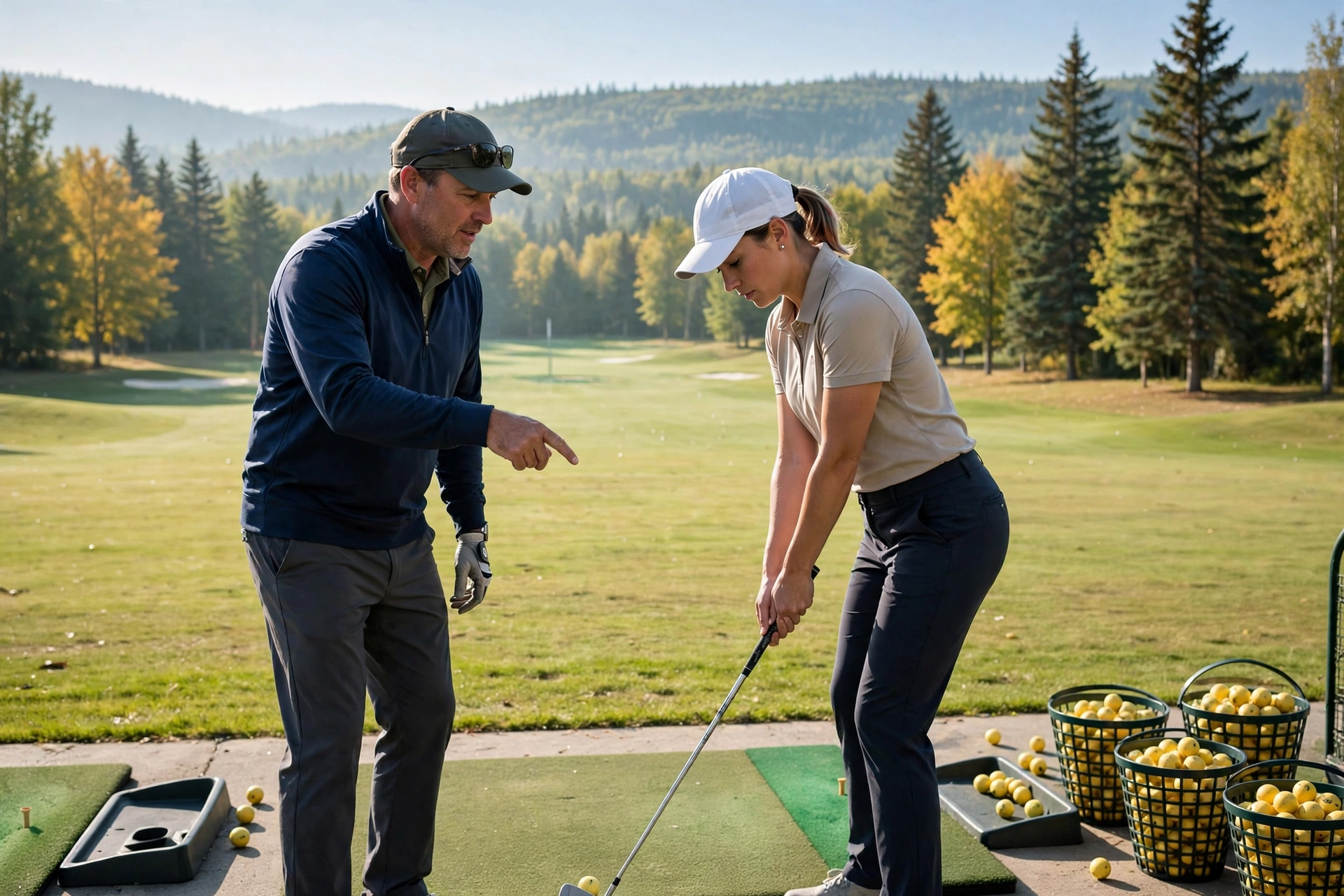
A golf instructor coaching a student on an outdoor driving range

A new driver costs $700 or more. A five-lesson package with a good coach costs about the same — and unlike the driver, lessons can actually fix the slice. But golf lessons in Canada are not cheap, and the price range is wide: a private hour with a PGA of Canada professional runs roughly $90 to $150 depending on where you live, while group clinics cost a fraction of that. This guide lays out real 2026 prices from Canadian facilities, what you actually get for each format, and how to tell whether lessons are worth it for you.

What golf lessons cost in Canada (2026 prices)

Prices below are in Canadian dollars, from facilities that publish their rates. Most are quoted before tax.

Private lessons (one-on-one, about an hour)

In the Greater Toronto Area, expect $120 to $150 an hour. Golf Life in Toronto and Mississauga charges $120–$135 for a single hour; Borg Golf Academy in the GTA charges $150; TJ Kim in Markham charges $145, including a basket of balls. Outside the big cities it is cheaper. St. Eugene Resort in Cranbrook, B.C. charges $90 for a 45-minute private lesson; Pitt Meadows Golf Club in B.C. charges $125 for 45 minutes. A reasonable Canada-wide range for a single private lesson is $90 to $150 an hour.

Semi-private lessons (two to six golfers, per person)

Two players — roughly $70 to $100 each per hour. Three to six players — $40 to $75 each. Golf Life, for example, charges $75 per person for two players and $40 per person for six.

Lesson packages (the smart buy)

Packages of four or five lessons typically save 10 to 20 percent per lesson. Golf Life's four-lesson series is $460 (about $115 a lesson). Borg's five-pack is $675 ($135 a lesson, down from $150). ParLuxe Indoor Golf in Mississauga lists a five-pack at $525.

Group clinics

The cheapest way in. Most courses and ranges run seasonal group clinics — usually a small group with one pro for an hour — at a fraction of a private hour. Ask your local pro shop; clinics are rarely advertised loudly and often fill from a waitlist.

Playing lessons (on the course)

A playing lesson — nine holes with a pro walking you through decisions, course management, and routine — costs more than a range hour because it takes longer and includes green fees. Expect it to run roughly double a standard private lesson. It is the best format if your swing is fine on the range and falls apart on the course.

Indoor and winter lessons

Canada's season is short, but lessons are not. Indoor simulator facilities in most cities offer year-round coaching with launch-monitor data — useful if you want to work on your swing between November and April instead of starting over every spring.

What to look for in a coach

Price is not the whole story. Before you book, check three things:

  1. Credentials. Look for a PGA of Canada certified professional. It is the standard teaching credential in this country, and it is easy to verify.
  2. A plan, not just tips. A good first lesson ends with a diagnosis and a short plan — one or two things to work on, in what order. If a coach tries to rebuild five parts of your swing in an hour, find another coach.
  3. Feedback you can see. Launch-monitor numbers or simple video of your swing make a lesson far more useful than a pro just watching and talking. Most city facilities now include this as standard.

How many lessons do you need?

One lesson can fix one clear problem — a grip, a setup flaw, a slice caused by an open clubface. But lasting change takes repetition, which is why packages exist. A realistic starting point for most golfers is three to five lessons over a month or two, with practice in between. After that, a check-in lesson every month or two keeps bad habits from creeping back. The honest rule: lessons only work if you practise between them. A lesson a week with no range time in between is money spent on conversation. If you cannot practise, spend the money on green fees and enjoy the game as it is.

Are lessons worth it?

Do the comparison honestly. A new driver is $700–$900 and will not fix a slice. A five-lesson package is roughly $550–$675 and might. If your goal is a lower score, lessons are the best money in golf. If your goal is simply to enjoy your Saturday round, they are optional — and that is fine too.

Lessons are most worth it when:

  • You are new and want to build a swing that will not hurt you later.
  • You have one persistent miss (slice, chunk, top) that no amount of range time has fixed.
  • You are stuck at the same score and cannot tell why.

They are least worth it when:

  • You will not practise between lessons.
  • You want a quick fix the week before a tournament.
  • You are happy with your game and just like playing.

There is no wrong answer — only a mismatch between what you buy and what you actually want.

Cheaper ways to get better

If private lessons are out of budget, you still have options:

  • Group clinics at your home course — the lowest-cost coaching available, and a good way to meet playing partners.
  • A single diagnostic lesson, then self-directed practice. One hour with a pro to find the one thing to work on, then a month of range sessions on that one thing, is a very efficient use of $120.
  • Junior programs, if you are buying for a kid. Most courses discount junior lessons heavily — often 20 percent off adult rates — and many run free or low-cost junior clinics in spring.

How to book

Start at the pro shop of a course you already play. Ask who teaches, what formats they offer, and what a first lesson looks like. You can also search the PGA of Canada's find-a-coach listings, or check indoor simulator facilities in your city for winter options. Book one lesson before committing to a package — a coach is a relationship, and the first hour tells you whether it fits.

← All guides

Travel • Canada • 2026

Bucket-List Beauty, Public Price Tags

Eight gorgeous Canadian courses you can actually afford—plus two dream splurges for one day.

Cabot Cliffs golf course beside the ocean in Cape Breton, Nova Scotia

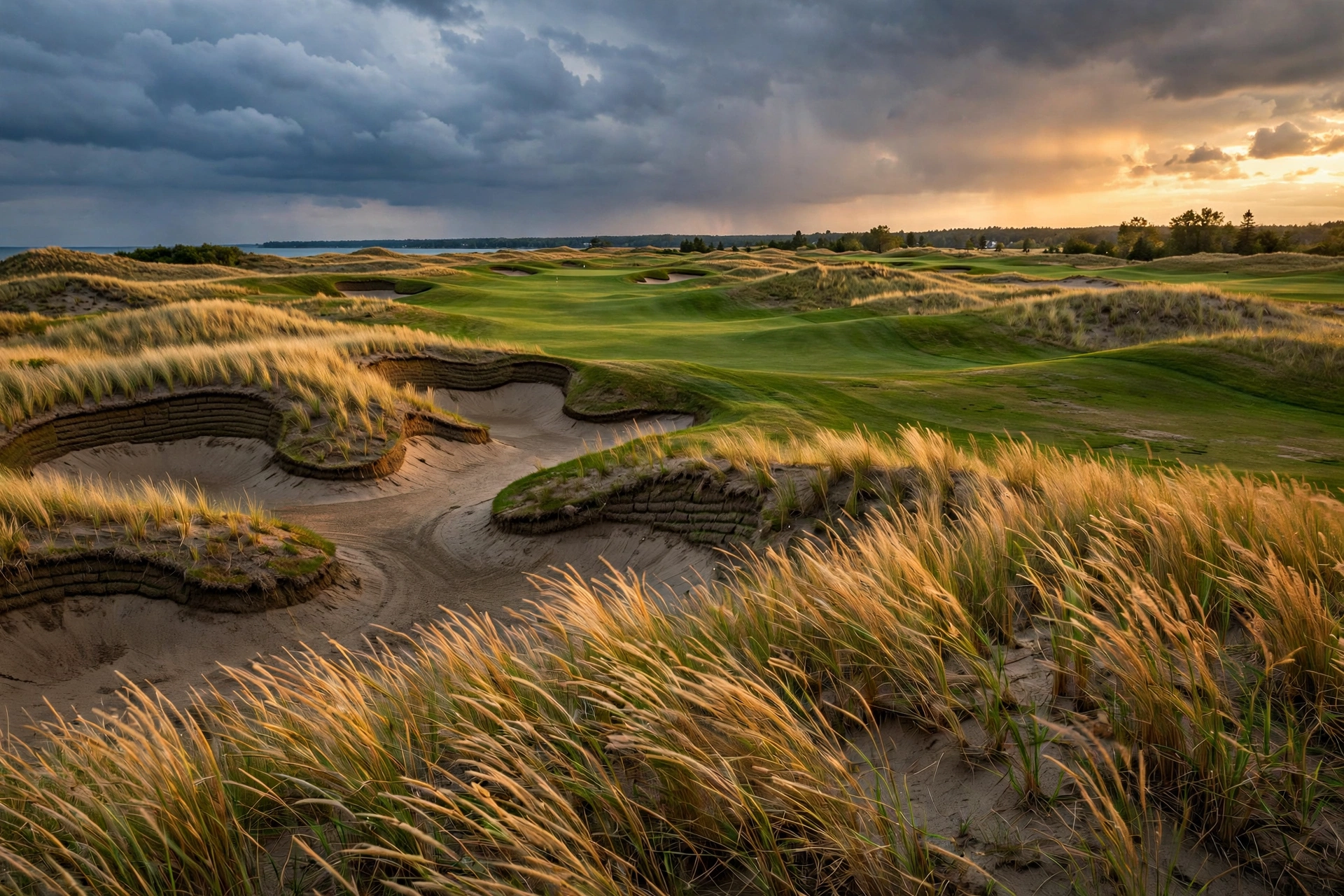
You don't need a private membership or a $300 green fee to play jaw-dropping golf in Canada. From ocean-side links in Nova Scotia to mountain valleys in Alberta, some of the country's most stunning courses are public—and cost less than a night out. Here are eight beautiful, genuinely public courses you can play for around $150 or less, plus a couple of dream splurges for the bucket list.

A quick note on pricesGreen fees below are approximate 2026 peak-season rates in CAD and can change. Always confirm with the pro shop when you book.
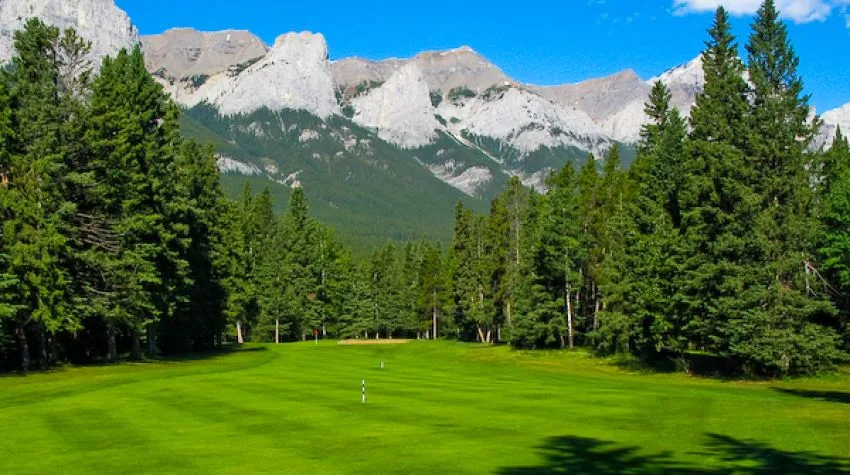
Canmore Golf and Curling Club fairway beneath the Rocky Mountains
01

Canmore Golf & Curling Club — Canmore, Alberta (~$95)

A century-old course, opened in 1926, sitting in the Bow Valley with Rocky Mountain views on both sides of you. It's walkable, charming, and freight trains still roll past the fairways. Semi-private, but visitors are welcome every day.

Why it makes the list: Mountain golf at a municipal-course price. The ~$95 walking rate, GST included, is one of the best value-to-scenery ratios in the country.

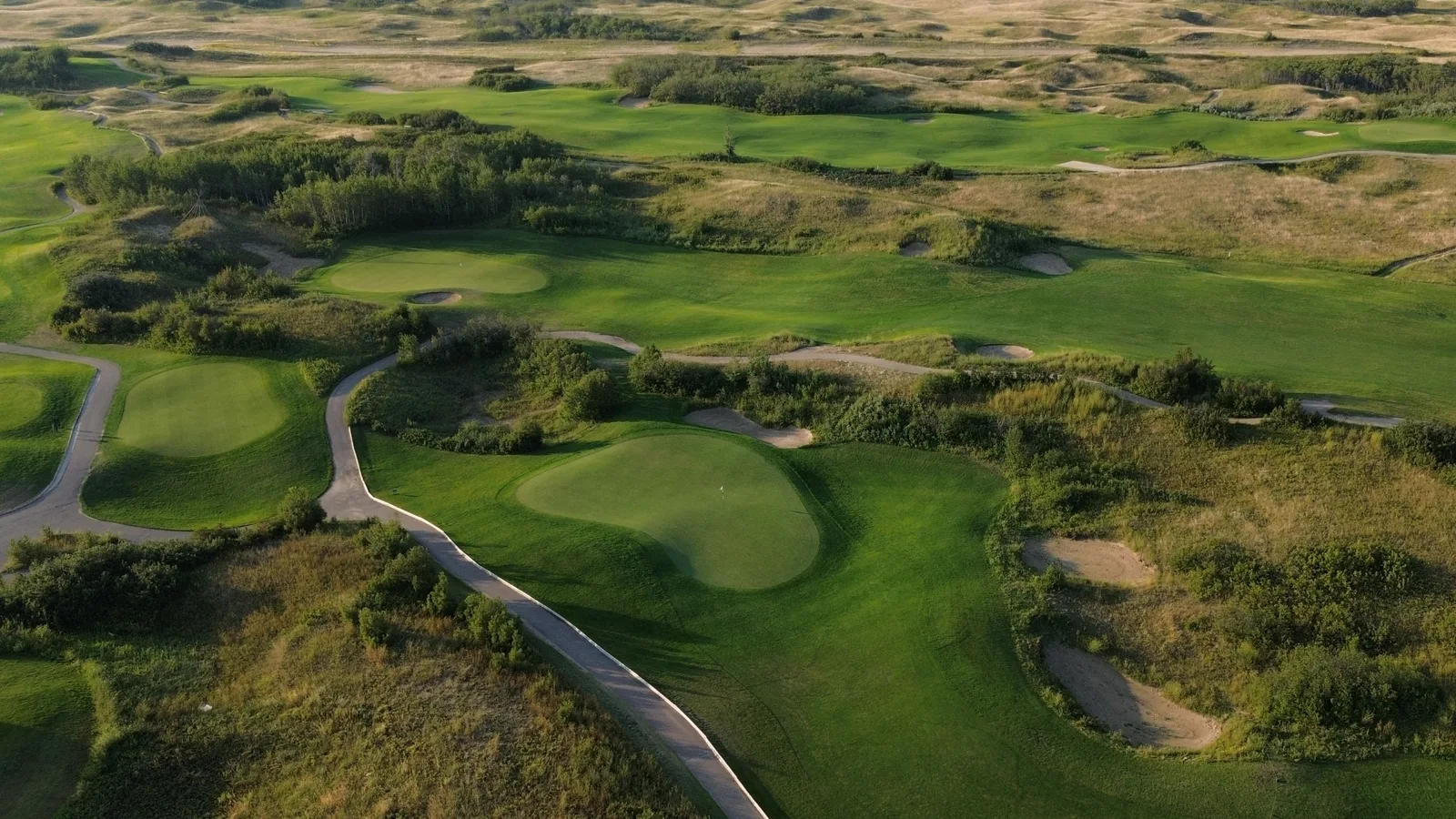
Aerial view of Dakota Dunes Golf Links routed through natural sand dunes
02

Dakota Dunes Golf Links — Whitecap, Saskatchewan ($75–$85)

An authentic links-style course routed through rolling natural sand dunes on Whitecap Dakota territory, just south of Saskatoon. Wind, fescue, and dune-top views that feel more like Scotland than the Prairies.

Why it makes the list: $75 walking Monday–Thursday, $85 Friday–Sunday, taxes in, and a $62 twilight rate after 3 PM. Arguably the best sub-$100 golf in Canada.

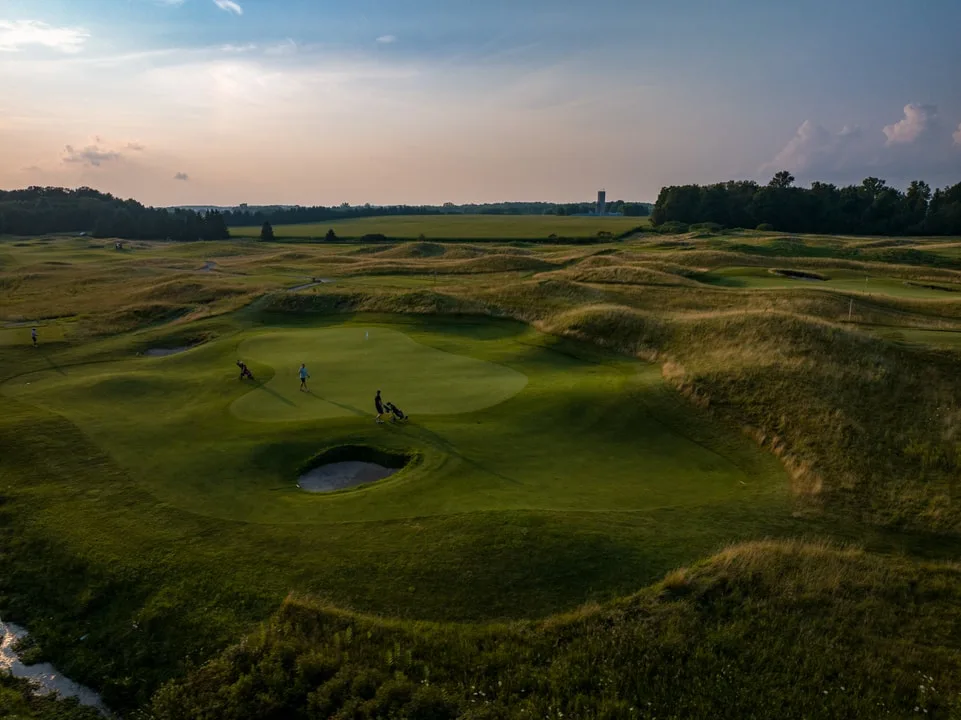
Tarandowah Golfers Club greens surrounded by fescue and pot bunkers at sunset
03

Tarandowah Golfers Club — Avon, Ontario (~$78–$88)

Martin Hawtree's windswept links design with fescue mounds and deep pot bunkers—SCOREGolf says it “would look quite at home anywhere in the United Kingdom.” Semi-private, and guests can book as far ahead as they like.

Why it makes the list: Real links architecture an hour from London, Ontario, for under $90 walking on weekends.

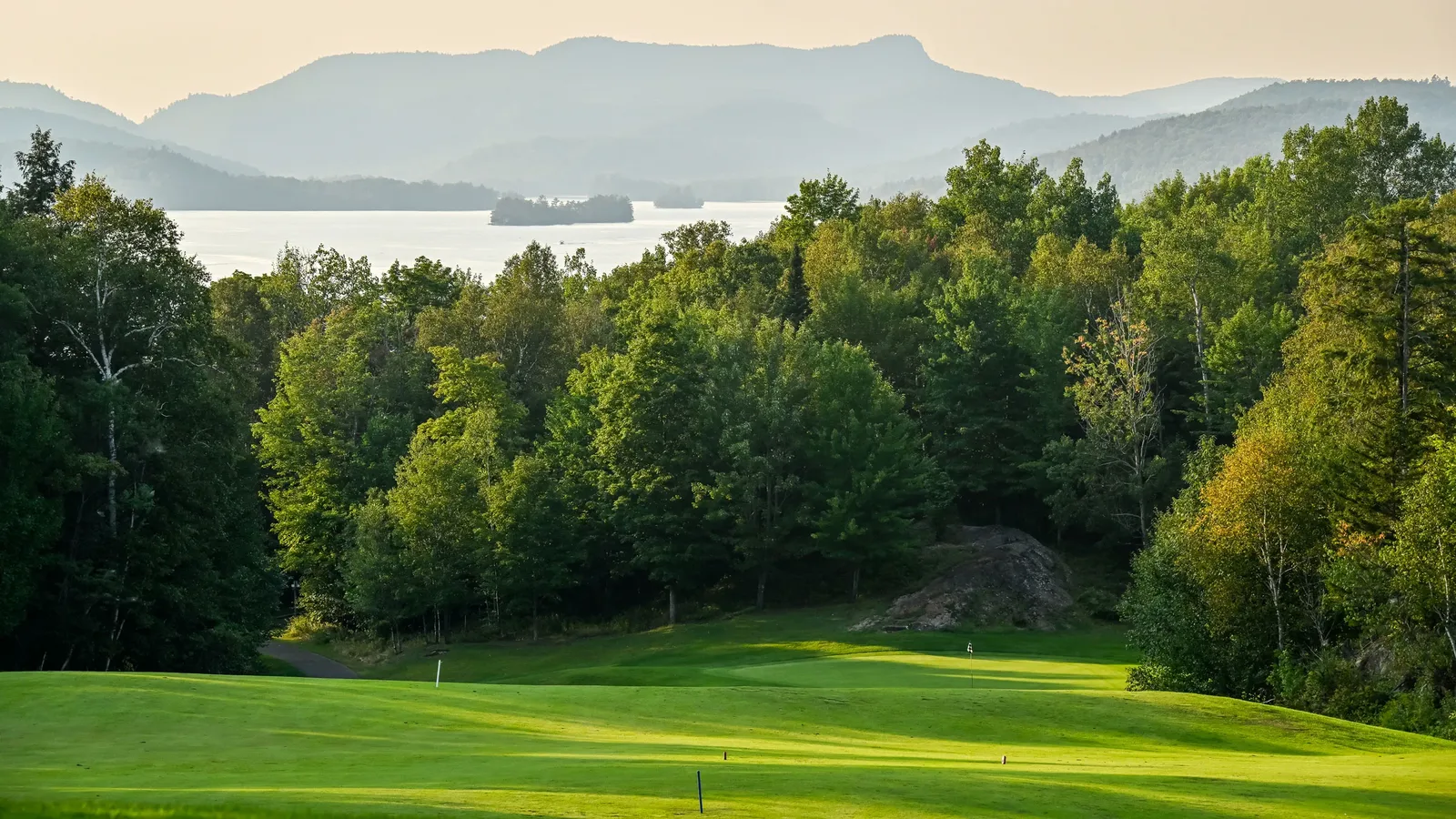
Le Géant golf course with a Laurentian lake and mountains beyond the fairway
04

Le Géant — Mont-Tremblant, Quebec (from $89)

A mountain championship course with plateaus sculpted into the mountainside and heart-stopping views across the Laurentians. Rates start at $89 with cart included, and same-day replays run $49–$69.

Why it makes the list: Big-mountain drama, cart included, and you can play 36 in a day for not much more than one round elsewhere.

Highlands Links fairway and bunkers overlooking the Atlantic Ocean in Cape Breton
05

Highlands Links — Ingonish Beach, Nova Scotia (~$125–$130)

Stanley Thompson's “Mountains and Ocean” masterpiece in Cape Breton Highlands National Park, at the tip of the Cabot Trail. Ocean holes, highland holes, and the occasional moose on the fairway. Fully public—no membership needed.

Why it makes the list: Consistently ranked among the best courses in Canada, and you can play it for about $130. This is the trip.

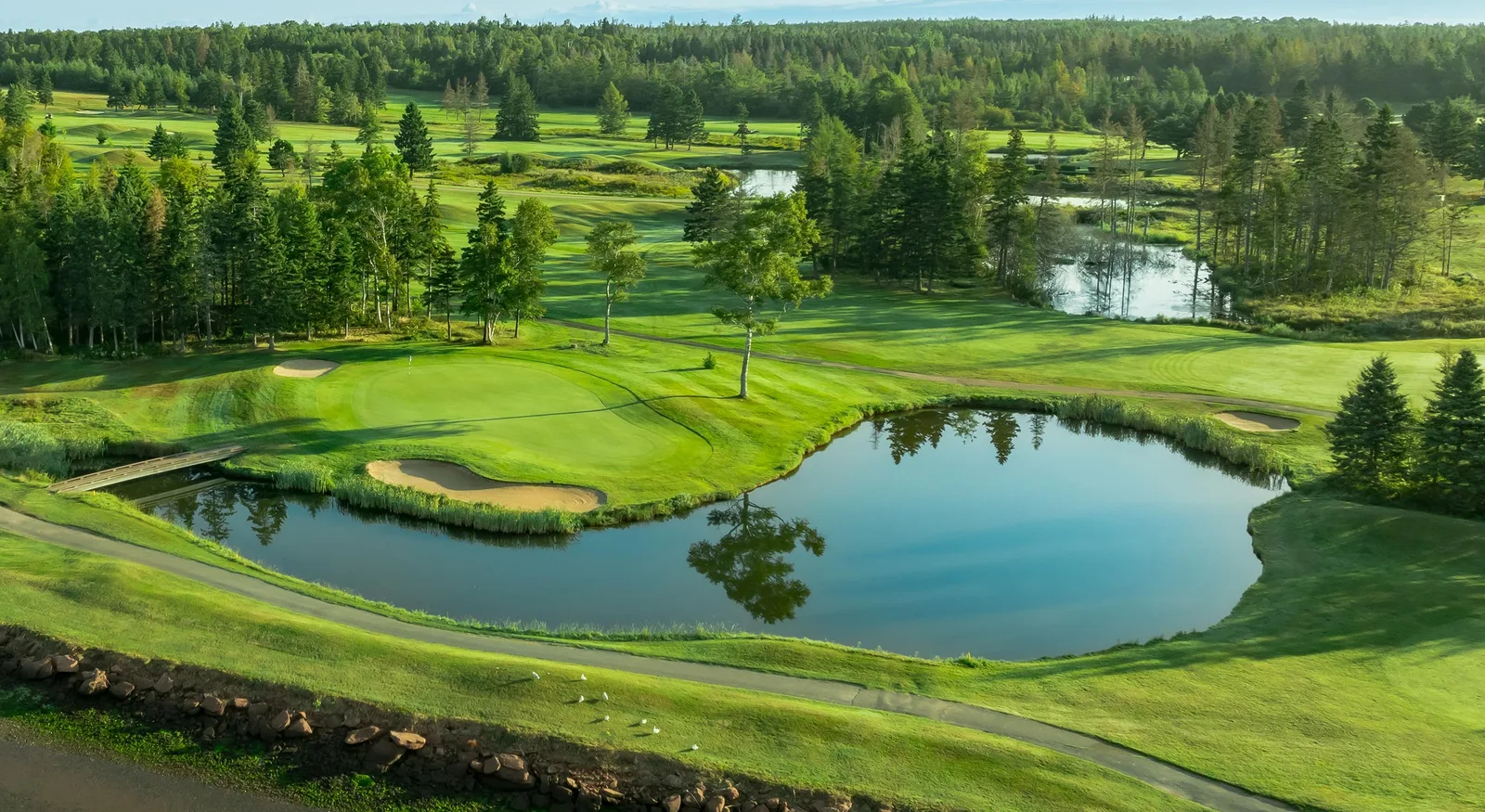
Aerial view of Brudenell River Golf Course greens, ponds, and wooded fairways
06

Brudenell River Golf Course — Georgetown, Prince Edward Island ($110–$140)

A classic parkland layout winding along the Brudenell River in a provincial park, minutes from the famous Crowbush. Provincially owned, open to everyone, with twilight rates of $80–$100.

Why it makes the list: The PEI golf trip without the PEI premium pricing. Pair it with a twilight round and you've played two great courses in a day.

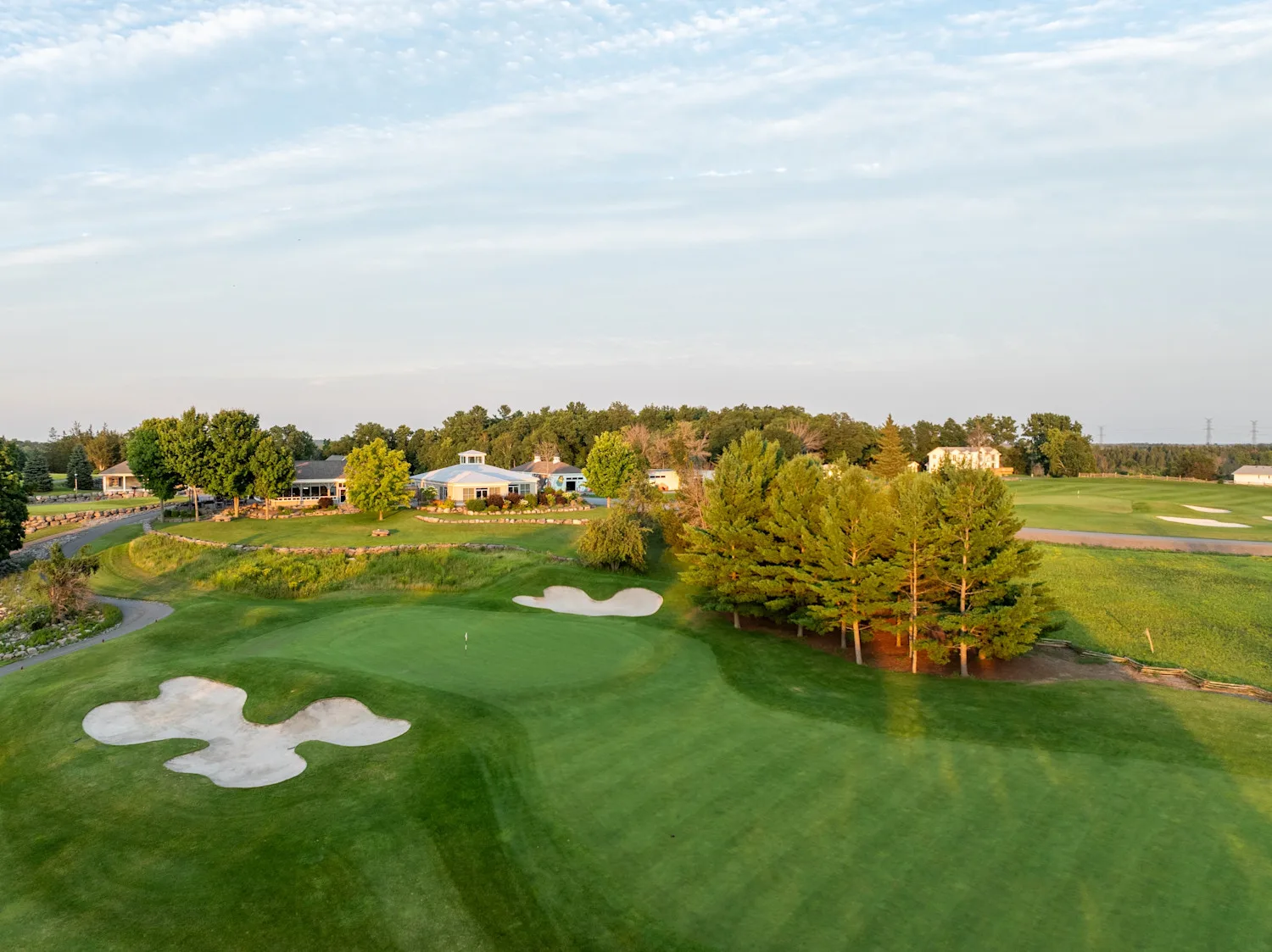
Black Bear Ridge golf green and bunkers viewed from above near Belleville, Ontario
07

Black Bear Ridge — Belleville, Ontario (~$84–$106)

Twenty-seven holes of rolling parkland with panoramic hillside vistas near the Bay of Quinte, ten minutes from Prince Edward County wine country. Semi-private with public play welcome.

Why it makes the list: Easy to reach, easy on the wallet—though we'd suggest confirming the rate with the pro shop when you book, as their online rack rates can be hard to pin down.

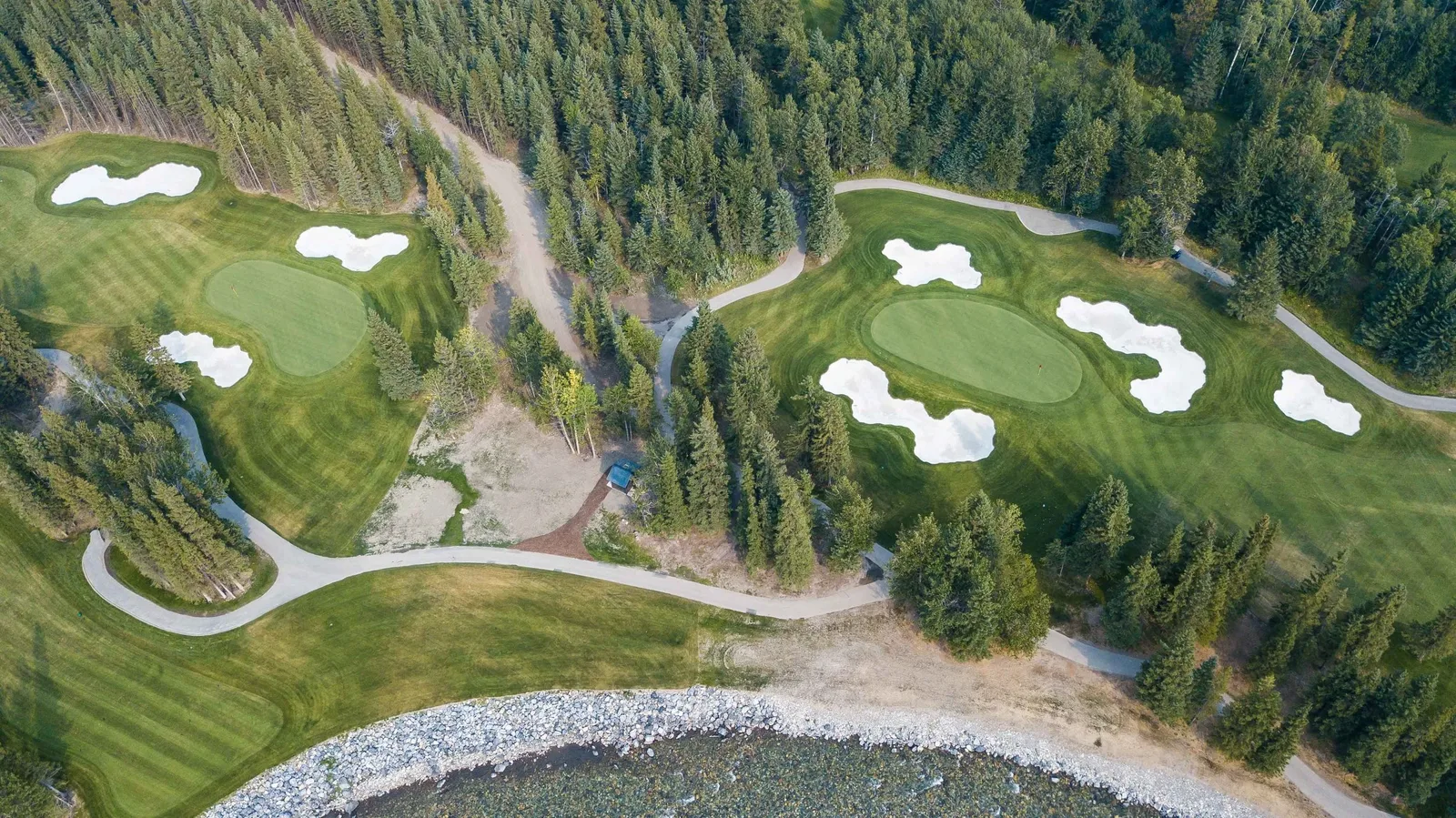
Aerial view of two greens beside the river at Kananaskis Country Golf Course
08

Kananaskis Country Golf Course — Kananaskis Village, Alberta ($95 twilight)

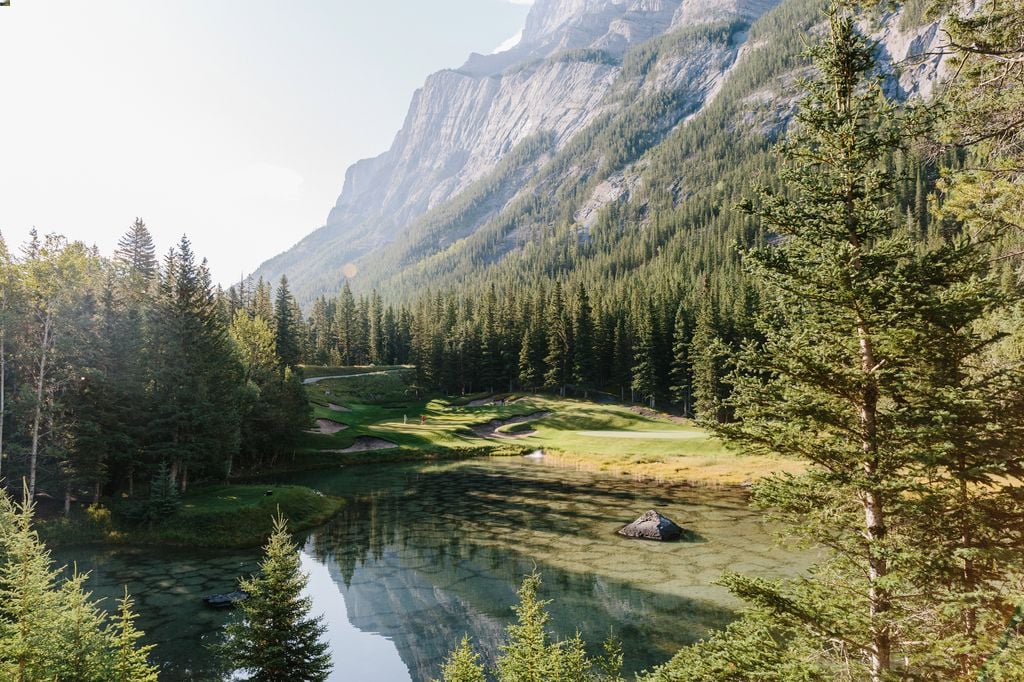
Two Robert Trent Jones Sr. courses in the dramatic Kananaskis Valley, with the river winding through the fairways and soaring Rockies as the backdrop. Standard peak rates run $175–$220, but the twilight rate—$95 any day of the week—is one of the great steals in Canadian golf.

Why it makes the list: Play one of the most spectacular valleys in the country for under a hundred bucks. Just book the afternoon.

Worth the splurge (one day)

Cabot Cliffs — Inverness, Nova Scotia (~$565)Every hole on the ocean, walking-only, day guests welcome. The best course in Canada and priced like it. Save up.
Fairmont Banff Springs — Banff, Alberta (~$269–$329)The “Castle in the Rockies” course, open to visitors. Iconic, unforgettable, and roughly triple the budget—but some rounds are worth it once.

Make the trip cheaper

  • Twilight is king: Most courses on this list cut 25–40% off after 2–3 PM, and in summer you can still finish.
  • Shoulder season: Late May and October bring lower rates and thinner crowds—the scenery doesn't care what month it is.
  • Walk when you can: Skipping the cart saves $25–$50 a round, and courses like Canmore and Dakota Dunes are great walks.
  • Book direct: The course's own website almost always beats third-party booking fees.

Course and rate sources

Course and pricing context: Canmore, Dakota Dunes, Tarandowah, Le Géant, Highlands Links, Brudenell River, Black Bear Ridge, Kananaskis, and SCOREGolf's 2026 ranking. Rates can change by date, demand, tax, cart inclusion, and residency.

Top 10 places to play

Provinces

Our province-by-province series ranks the best public golf in each province from cheapest to most expensive. One new province lands each month — start with Ontario.

  • OntarioRead the Top 10 →
  • British ColumbiaComing soon
  • AlbertaComing soon
  • QuebecComing soon
  • Nova ScotiaComing soon
  • Prince Edward IslandComing soon
  • New BrunswickComing soon
  • SaskatchewanComing soon
  • ManitobaComing soon
  • Newfoundland and LabradorComing soon
← All guides

Travel • Ontario • 2026

Top 10 Places to Play in Ontario, from Cheapest to Most Expensive

From a $55 municipal round to a $300 Muskoka splurge — Ontario’s best public golf, ranked at every budget.

Aerial view of an Ontario golf course carved through granite outcrops and pine forest beside a lake at sunset

Ontario has more golf courses than any other province in Canada — over 800 — and the best news is you don’t need a private membership to play the good ones. This is the first stop in our province-by-province series: the ten best public rounds in Ontario, ranked from cheapest to most expensive. We start with century-old municipal courses in Toronto and climb through links-style tests, a course built from famous replica holes, and some of the most decorated public layouts in the country, ending at a granite-and-pines Muskoka splurge. Every course here welcomes anyone who books a tee time — no membership required.

A quick note on pricesGreen fees below are approximate 2026 peak-season rates in CAD and can change. Always confirm with the pro shop when you book.
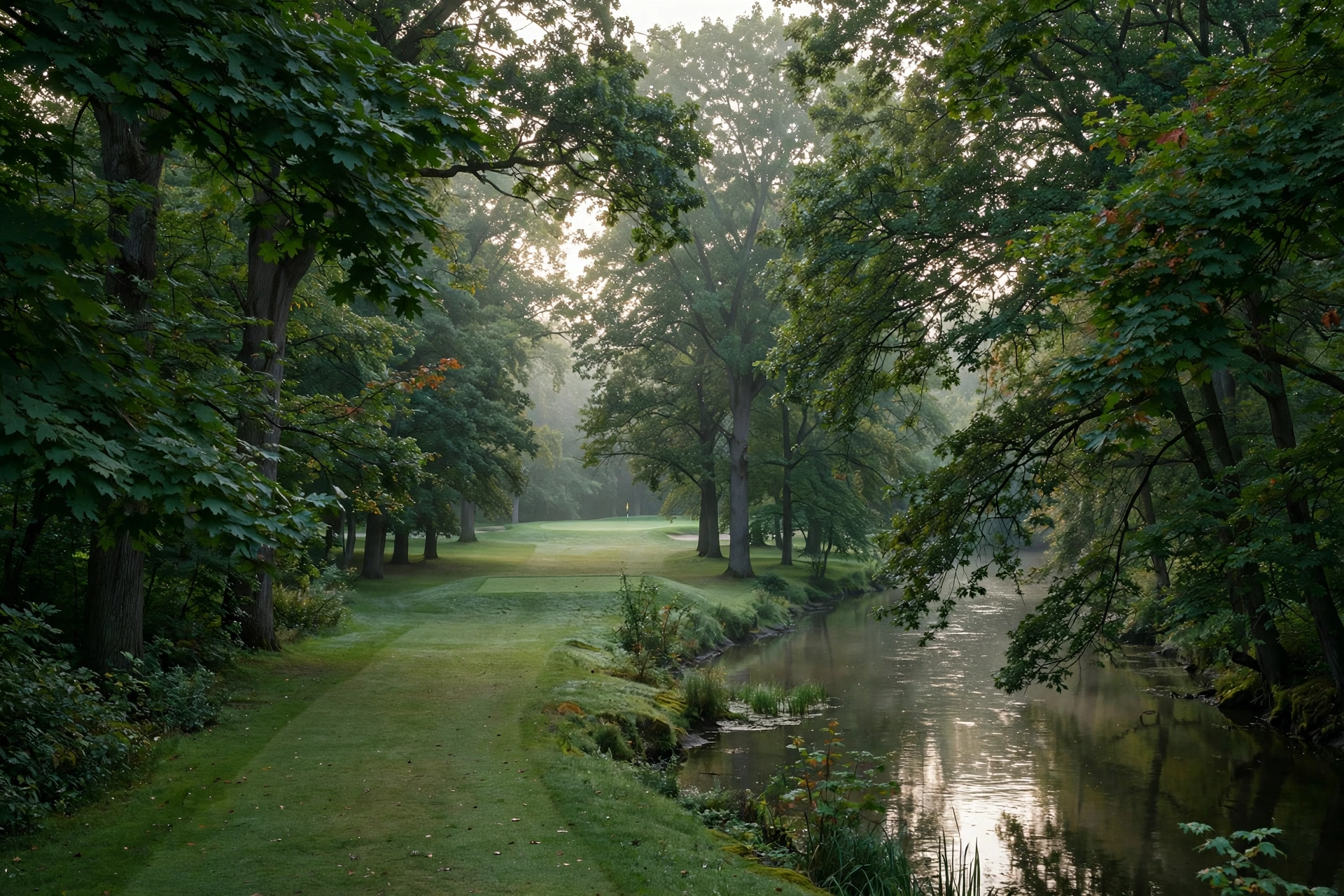
A tree-lined fairway running alongside the Humber River at Humber Valley Golf Course in Etobicoke
01

Humber Valley Golf Course — Etobicoke, Ontario (~$55)

One of Toronto’s oldest courses, open since 1921, Humber Valley is a par-70, 5,446-yard walk along the Humber River. The 392-yard par-4 14th and the par-3 15th were designed by Stanley Thompson, which tells you everything about the pedigree per dollar. Tight tree-lined fairways and small greens keep the scores honest — this is a thinking golfer’s round, not a grip-it-and-rip-it one. It’s a City of Toronto municipal course, open to everyone.

Why it makes the list: a century of golf history for about the price of a takeout dinner for two. One of the cheapest genuine rounds in the province.

A tee shot over a pond framed by mature trees at Tam O’Shanter Golf Course in Scarborough
02

Tam O’Shanter Golf Course — Scarborough, Ontario (~$58–$68)

A full 6,083-yard par 72 opened in 1974, winding along Highland Creek in Scarborough. The city itself calls out the par-4 13th — a picturesque tee shot over a pond framed by green tree line — as the featured hole. Mature trees, an easy-to-walk routing, and weekend adult rates of $68.04 ($57.96 on weekdays) make it a reliable everyday track. City of Toronto municipal, open to all.

Why it makes the list: a complete, honest 18 holes under $70 on a weekend. The weekday rate is one of the best bargains in Ontario.

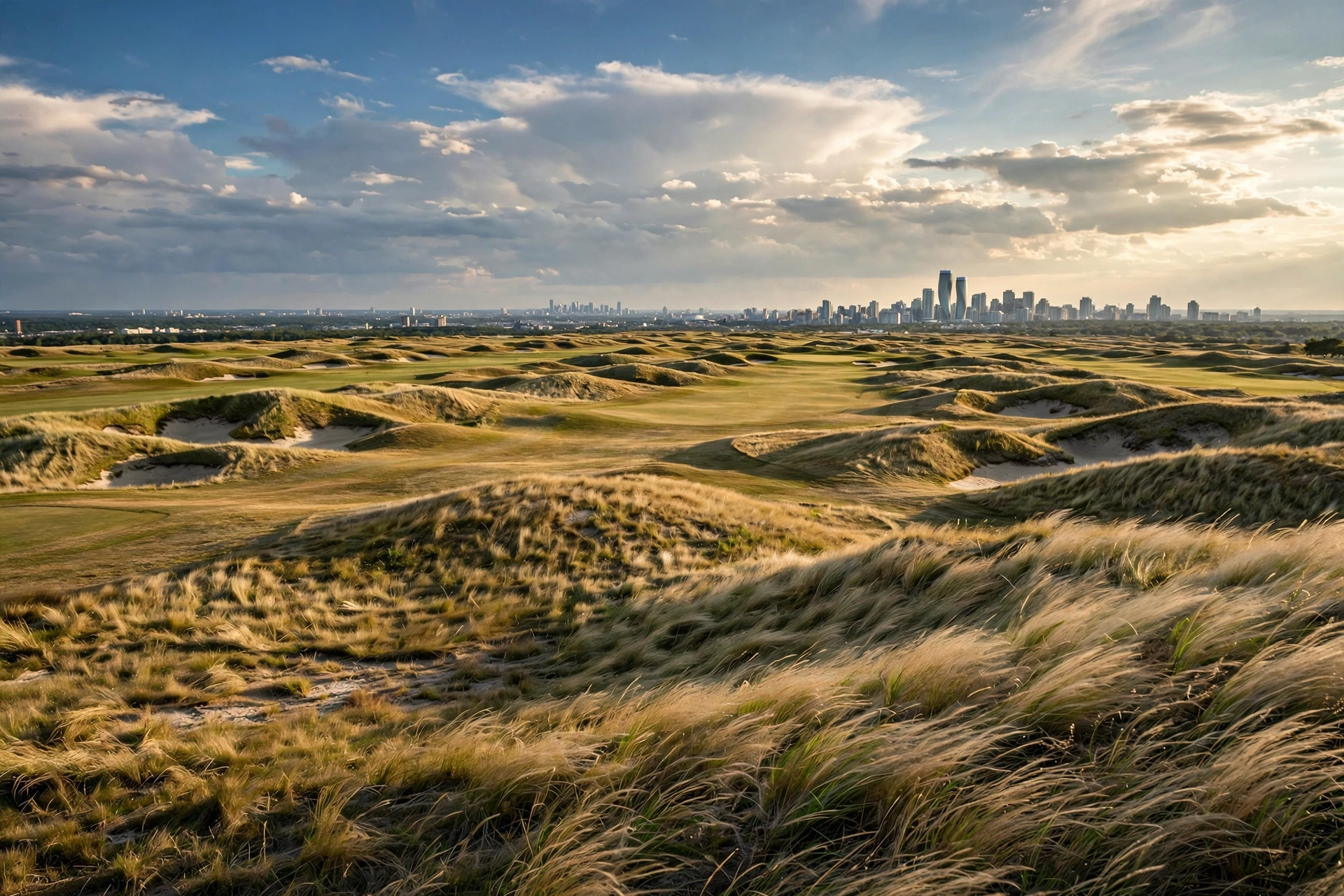
Links-style fairways and fescue mounds with the Mississauga skyline beyond at BraeBen Golf Course
03

BraeBen Golf Course — Mississauga, Ontario (~$54–$78 walk)

BraeBen is genuinely one of the most unusual rounds in the GTA: opened in 2005 on a reclaimed landfill, it plays over rolling, links-like terrain with near-constant wind and panoramic city views from the highest point in Mississauga. Reviewers keep calling it an underrated hidden gem, and the numbers back them up — weekend adult walking is $78.25, but Monday-to-Thursday walking drops to $53.98. A City of Mississauga course, open to everyone.

Why it makes the list: links-style golf with skyline views for municipal money. Walk it on a weekday and it’s absurd value.

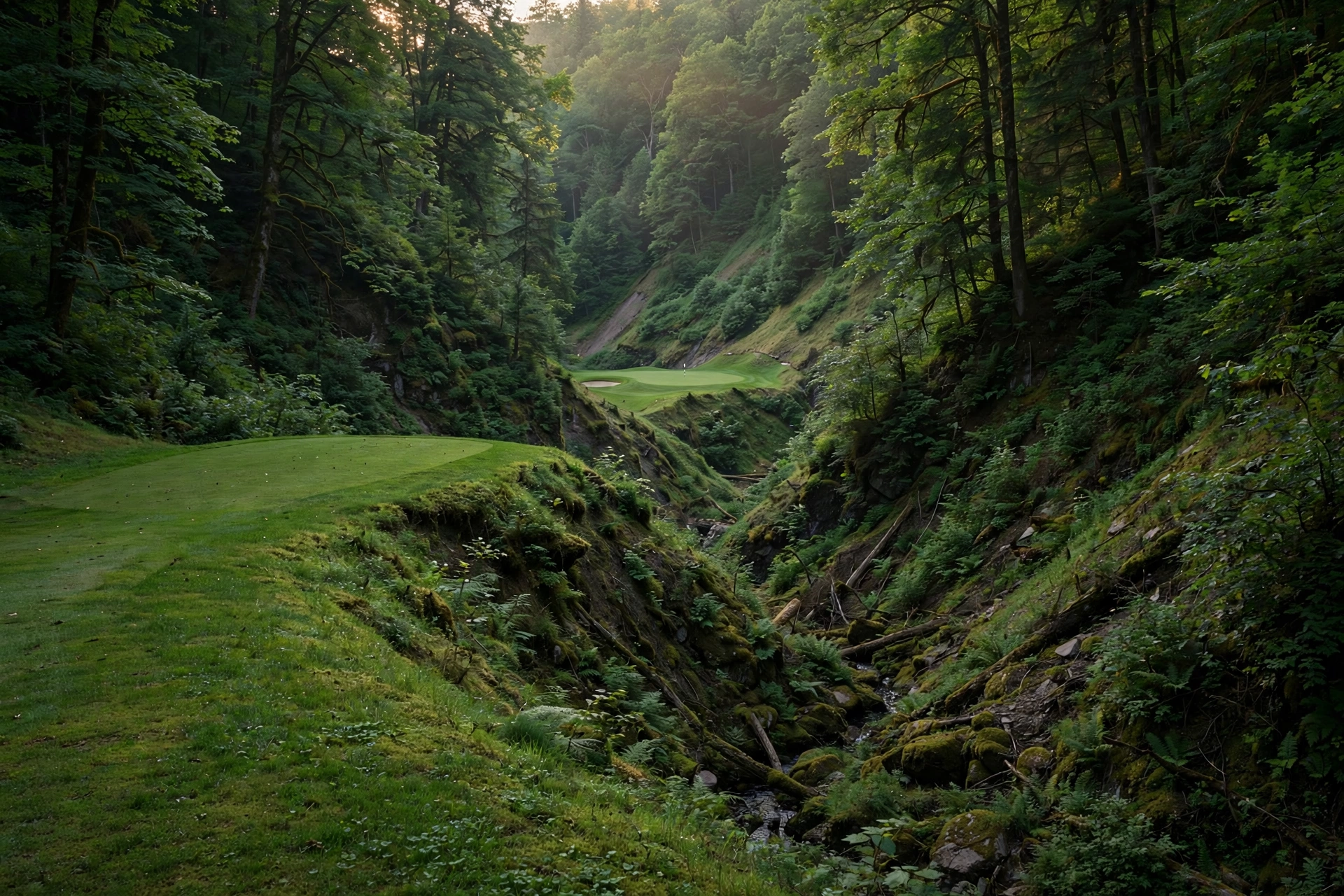
A green tucked into the forested ravine at Don Valley Golf Course in North York
04

Don Valley Golf Course — North York, Ontario (~$73–$82)

The “crown jewel” of the city courses: a 6,163-yard par 72 designed by Howard Watson that opened in 1956 and celebrated its 70th anniversary in 2026. The legendary “Hallelujah Corner” — holes 12 and 13, including a ravine-carry par 3 — delivers a genuine championship feel at a fraction of private-club prices. Weekend adult rate is $81.90 ($73.09 weekdays; HST extra). City of Toronto municipal, open to all.

Why it makes the list: the most prestigious-feeling round you can play in Ontario for under $85.

Fescue-lined links-style fairways in cottage country at Muskoka Highlands Golf Links in Bracebridge
05

Muskoka Highlands Golf Links — Bracebridge, Ontario (~$89)

Billed as “A Wee Touch of Scotland,” this fescue-lined, links-style course plays 5,636 yards to a par 69 in the heart of cottage country. It’s a proper test that still keeps beginners in play — and at $89 on weekends ($79 Monday to Thursday, taxes included, cart extra), it’s one of the best-value 18-hole rounds in Muskoka. Fully public.

Why it makes the list: cottage-country golf under $90 with the tax already in. Hard to beat.

Waste bunkers and rolling fairways on the Hoot course at TPC Toronto at Osprey Valley in Caledon
06

TPC Toronto at Osprey Valley (Hoot course) — Caledon, Ontario (up to ~$188)

Canada’s first TPC facility (2018) and a Canadian Open venue, open to the public daily with advance booking. The Hoot ranks 41st in Canada and 17th among public-access courses in SCOREGolf’s rankings, and all three courses here (Hoot, North, Heathlands) sit among the country’s top public layouts. Dynamic pricing means the Hoot runs $79.20 to $188 depending on demand — book off-peak and it slides down the list; book prime time and it’s a proper premium round.

Why it makes the list: tour-venue golf that’s genuinely open to the public. Pick your tee time, pick your price.

The island-green replica hole at Wooden Sticks Golf Club in Uxbridge
07

Wooden Sticks Golf Club — Uxbridge, Ontario (~$200)

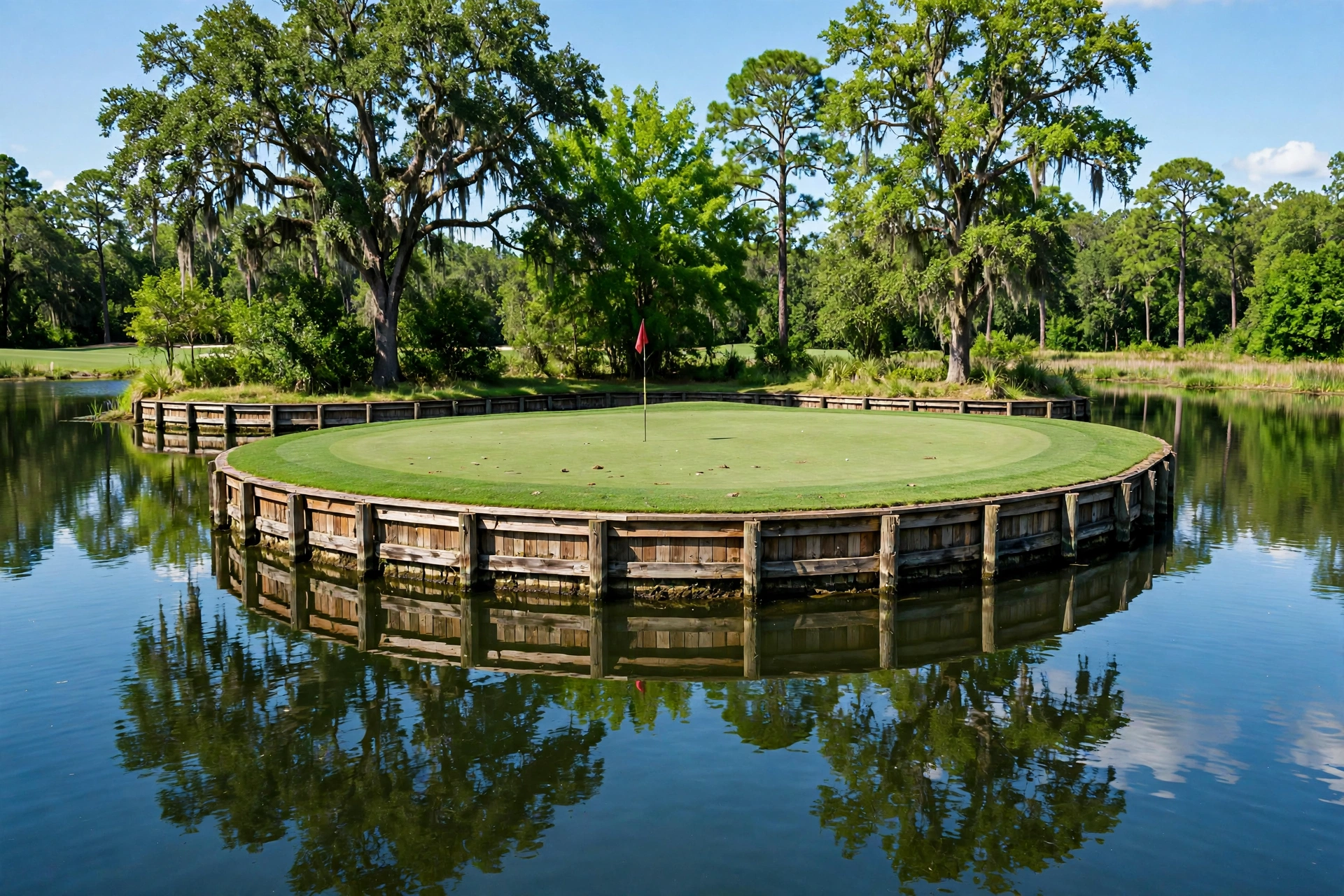
Twelve of Wooden Sticks’ 18 holes are lovingly recreated famous holes — the 12th at Augusta National, Royal Troon’s “Postage Stamp,” and the island-green 17th at TPC Sawgrass among them. The ~$200 rate bundles a shared power cart, the practice facilities, and a full post-game meal, so it’s as much a golf day out as a round of golf. Public, though note they don’t take single-player bookings — bring at least a twosome.

Why it makes the list: play the most famous holes in golf without a private-club invitation. The meal-included format makes it a great group day.

A par-3 green with Georgian Bay behind it at Cobble Beach Golf Links in Kemble
08

Cobble Beach Golf Links — Kemble, Ontario (~$229)

A Doug Carrick design hugging Georgian Bay near Owen Sound, consistently ranked among Canada’s top 100 courses. The par-3 17th, with the Bay as its backdrop, is one of the most photographed holes in Ontario — and the conditioning is as premium as the price. It’s a semi-private resort community, but daily-fee visitors are welcome (book ahead). Peak rate is $229 before 3:00 pm, including a cart with GPS and range use; after 4:00 pm it drops to $129.

Why it makes the list: top-100 Canada golf with Georgian Bay views — and the twilight rate is a genuine steal for this calibre of course.

Sod-wall bunkers and fescue dunes at Eagles Nest Golf Club in Maple
09

Eagles Nest Golf Club — Maple, Ontario (~$250)

Voted the #1 public golf venue in the GTA every year since 2008. Another Doug Carrick creation, this rugged links-style track — sod-wall bunkers, fescue dunes, fickle breezes — has hosted Canadian Open qualifying and holds a 4.5-star average across more than 1,200 Google reviews. The $250 rate includes a shared cart and an hour of practice-facility use. Fully public daily-fee.

Why it makes the list: the GTA’s most decorated public course, priced like it. The one to book when you want to see what the fuss is about.

A fairway threaded between granite outcrops and tall pines at Muskoka Bay Resort in Gravenhurst
10

Muskoka Bay Resort — Gravenhurst, Ontario (~$300)

A Doug Carrick design folded into Muskoka’s granite outcrops and pines, ranked among the top 10 public courses in Canada. Public tee times are welcomed at this resort course, with the peak public rate at $300 including golf and cart (resort guests pay $250). It’s the splurge pick of the province — the one round per summer where you just pay up and enjoy it.

Why it makes the list: every province gets one dream round. This is Ontario’s.

Play Ontario for less

  • Start with the city courses: five of the six cheapest rounds on this list are Toronto and Mississauga municipal courses, and weekday walking rates — Tam O’Shanter at $57.96, BraeBen at $53.98 — are the province’s best bargains.
  • Ride the dynamic pricing: TPC Toronto’s Hoot slides from $79 to $188 depending on demand. Book off-peak and premium golf drops into the mid-list.
  • Go twilight: Cobble Beach falls to $129 after 4:00 pm — top-100 Canada golf for half the peak price.
  • Walk when you can: the municipal courses get meaningfully cheaper on foot, and most are easy walks.
  • Book direct: the course’s own website almost always beats third-party booking fees.

Course and rate sources

Course and pricing context: Humber Valley (Fairways Golf & Travel’s GTA value list; City of Toronto 2026 budget fee schedule), Tam O’Shanter (City of Toronto official course page), BraeBen (City of Mississauga green-fee page), Don Valley (City of Toronto published rate card via Best in Hood, verified August 2026), Muskoka Highlands (official rates page), TPC Toronto at Osprey Valley (TPC official 2026 partner course rates document), Wooden Sticks (official 2026 green-fee rates), Cobble Beach (official 2026 rates page), Eagles Nest (official 2026 rates page), and Muskoka Bay Resort (official 2026 rates page). Rates can change by date, demand, tax, cart inclusion, and residency. The Humber Valley figure is approximate — the city’s exact 2026 weekend rate wasn’t published in an accessible format.
← Home
The par-3 4th hole at Fairmont Banff Springs Golf Course — the Devil's Cauldron — with its green across a glacial pond beneath Mount Rundle

About

Buy smarter. Play better. Keep golf fun.

Everyday Golfer offers Canadian gear guides, buying advice, game basics, honest cost breakdowns, and golf travel pieces for people who love the game but do not organize their lives around a launch monitor.

The site starts from a simple observation: the newest product is rarely the whole answer.

Our goal is practical: explain what matters, identify real value, and help regular golfers make choices that fit their swing, budget, and time.

How we work

Gear guides compare useful design differences and name trade-offs. Cost guides use dated Canadian price snapshots. Affiliate links, when added, will be labelled clearly and will not change what a reader pays.

What we believe

A fitting beats a guess. A lesson can beat a new club. A used model can be the smartest model. And the best ball is often the one you can afford to play consistently.

← Home

Transparency

Affiliate Disclosure

How this site may earn money, without changing what a purchase costs you.

Everyday Golfer may earn a commission when a reader clicks a clearly identified affiliate link and makes a qualifying purchase. That commission is paid by the retailer and does not add to the price the reader pays.

Affiliate relationships do not guarantee a positive review or a place in a guide. We aim to explain both the strengths and drawbacks of every product we recommend.

At launch, the purchase buttons in product guides are placeholders only. They do not lead to retailers and must be replaced with approved, correctly disclosed affiliate links before the site begins monetizing traffic.

Questions

If you have a question about a recommendation or a commercial relationship, use the contact page.

← Home

Contact

Send a note.

Spot an error, have a topic request, or want to ask how a guide was put together? Write your message below.

This opens your email app with your message filled in and ready to go. Review it there, then send.